
Newly elected MP Hannah Spencer thought her first day in the House of Commons would be about her constituents… but then Katie Hopkins saw her suit. 😱 Calling it a “proper little clown outfit,” Hopkins didn’t just stop at the fashion—she’s making a SHOCKING claim about who actually “owns” the Green Party now!
A political newcomer’s parliamentary attire has ignited a firestorm of criticism, placing style and substance in the national spotlight. Hannah Spencer, the newly elected Green Party MP for Gorton and Denton, faced a blistering personal attack following her debut in the House of Commons. The controversy centers not on policy, but on her choice of a vibrant green trouser suit worn during proceedings.
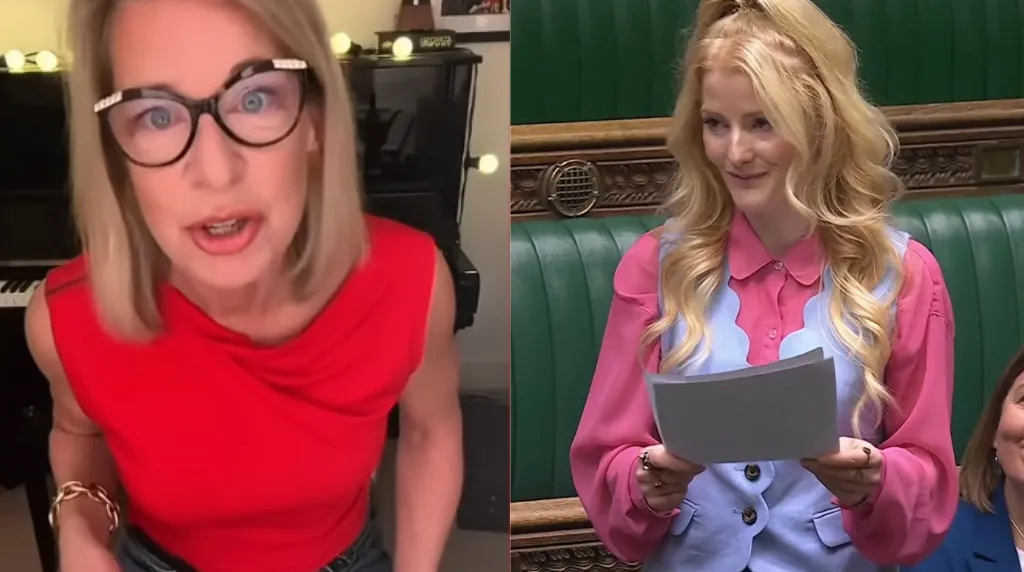
Media personality Katie Hopkins launched a scathing critique in a widely circulated online video. She derided Spencer’s outfit as a “proper little clown outfit” and a “comedy top.” Hopkins suggested the MP’s attire was more fitting for a Disneyland performer than a legislator. The remarks quickly escalated beyond fashion into personal denigration.
Hopkins further claimed the Green Party is now “just the party of Muslims,” citing the constituency’s demographic. She tied this assertion to Spencer’s election victory, framing it as a cultural shift rather than a political one. This layer added a deeply contentious ethnic and religious dimension to the criticism.
The attack did not stop at clothing. Hopkins questioned Spencer’s intelligence and professional background. She dismissed the MP as having no “iota of intelligence” and suggested her experience amounted to making “Instagram videos.” This characterization paints Spencer as unserious and unqualified for high office.
The video has sparked immediate debate over misogyny and the scrutiny faced by women in politics. Defenders argue Spencer has the right to personal expression and that focus should remain on her political platform. Critics of Hopkins allege her comments cross the line from critique into outright bullying and hate speech.

Parliamentary dress codes have relaxed significantly in recent decades, yet the incident highlights lingering expectations. While suits remain the norm, there is no official mandate. Spencer’s choice challenges traditional notions of how an elected official should present themselves to command respect.
This incident echoes past controversies where female MPs’ appearances are dissected more than their male counterparts’. It raises questions about whether such scrutiny is a deliberate tactic to undermine credibility. The focus on attire often overshadows policy discussions and legislative intent.
Spencer has not yet issued a public response to the specific comments. The Green Party is expected to address the matter, likely condemning the personal nature of the attack. The party may frame it as an attack on their values and on the democratic choice of her constituents.
Political analysts suggest the furor reflects a broader culture war. Elements of style, identity, and representation are becoming frontline battles in a polarized political landscape. An MP’s wardrobe is now a potent symbol for larger ideological conflicts.

The reaction on social media is sharply divided. Some support Hopkins’ right to criticize, while others condemn her language as abusive and discriminatory. The hashtag #DressCodeDebate is trending, with users posting images of historically flamboyant male politicians for comparison.
This controversy arrives amid heightened tension in UK politics. It diverts attention from pressing national issues like the cost-of-living crisis and healthcare. Critics argue such spectacle damages public faith in political discourse, reducing it to petty personal attacks.
The lasting impact on Spencer’s early career remains unclear. She could be overshadowed by the scandal or galvanize support as a figure challenging stale conventions. Her maiden speech and initial votes will now be watched even more closely for signs of her political substance.

Hopkins, no stranger to controversy, has again positioned herself at the center of a media storm. Her commentary continues to provoke strong reactions and guarantee widespread coverage. This pattern reinforces her brand but also draws consistent accusations of bigotry.
Ultimately, this episode forces a uncomfortable national conversation. It questions what truly denotes respect and professionalism in modern governance. The debate pits traditionalist views of solemnity against progressive values of individuality and breaking moulds.
The House of Commons, as an institution, now faces implicit questions about its culture. Whether it silently condones such external attacks or actively supports members against harassment will be telling. The Speaker may be called upon to defend the dignity of all members.
As the story develops, the core issue remains: should an MP’s competence be judged by their tailor or their tally in the voting lobby? The public’s answer to that question will shape political discourse for years to come. For now, Hannah Spencer’s first days in office are defined not by a policy agenda, but by a pair of green trousers.


