
**STARMER IN PANIC MODE AS MIGRANT HOTEL PROTESTS ERUPT IN 15 CITIES – NO END IN SIGHT, POLICE POWERLESS**
Britain is gripped by a wave of public anger that shows no signs of abating. In recent months, protests against the use of hotels to house asylum seekers have spread across at least 15 cities and towns, from Epping in Essex to Horley in Surrey, Bristol, Liverpool, Newcastle, Birmingham, and beyond. What began as localised demonstrations has escalated into a nationwide movement, with thousands taking to the streets every weekend, waving Union flags and St George’s crosses, chanting “send them home” and demanding an immediate end to taxpayer-funded migrant accommodation.
The trigger for the latest surge was a High Court ruling in August 2025 granting Epping Forest District Council a temporary injunction to prevent asylum seekers from being housed at the Bell Hotel. The decision followed weeks of protests after a resident at the hotel was charged with sexual assault on a 14-year-old girl. Local residents argued the presence of asylum seekers had caused “unprecedented levels of protest and disruption.” The government’s attempt to appeal the ruling only fuelled further outrage, inspiring other councils to seek similar court orders and emboldening demonstrators nationwide.
Official figures paint a grim picture. Asylum claims hit a record 111,084 in the year to June 2025, while the number of asylum seekers in hotels has actually risen slightly compared to the period before the last general election. More than 32,000 people were housed in around 210 hotels at various points, costing the taxpayer billions of pounds annually — money many working families believe should be spent on housing, NHS waiting lists, or schools for British children.

Labour came to power promising to “end asylum hotels” and save billions, with a target of phasing them out by the end of this Parliament in 2029. Home Office ministers have spoken of “managed and ordered” closures and reforming the asylum appeals process to clear the backlog. Yet critics point out that hotel usage has not fallen meaningfully, small boat crossings continue at high levels, and the government has ditched the previous Rwanda deportation scheme without a credible replacement. Prime Minister Sir Keir Starmer has repeatedly vowed to “smash the gangs,” but public patience is wearing thin.
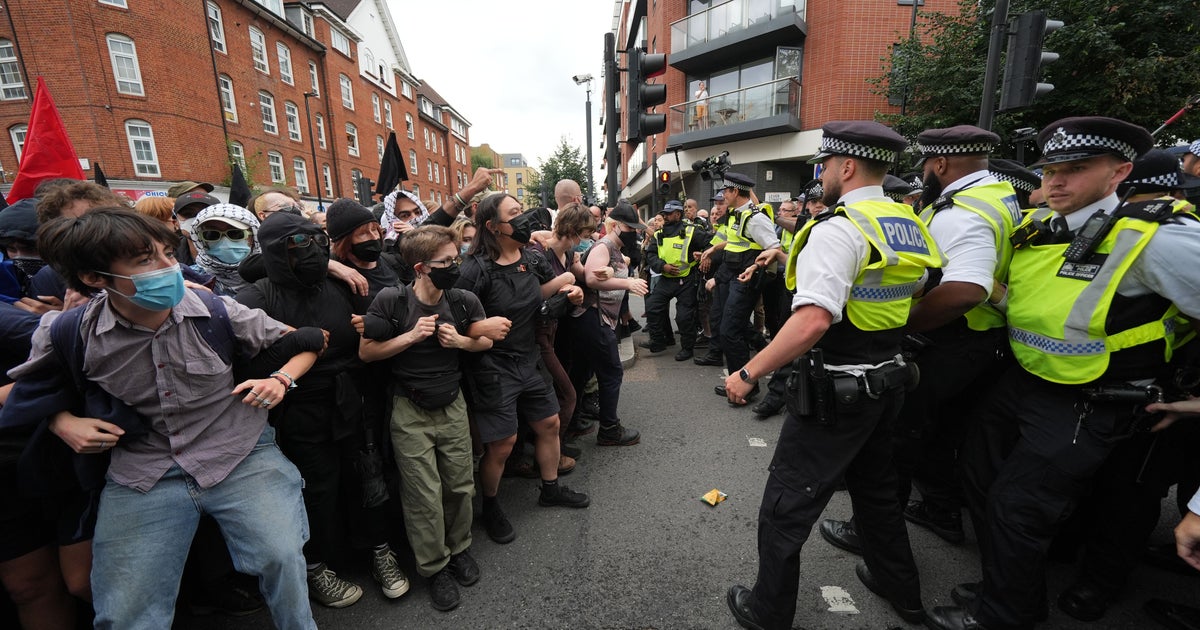
Protests have taken on a coordinated feel. Groups operating under banners such as “Abolish Asylum System” have mobilised in locations including Horley, Birmingham, Canary Wharf in London, Exeter, Tamworth, Cannock, Wakefield, and even parts of Scotland and Wales. In some towns, hundreds of demonstrators have gathered outside hotels, leading to scuffles with counter-protesters organised by Stand Up to Racism. Police have been forced to form cordons, with reports of fist fights, flares, and arrests in Bristol and elsewhere. While most demonstrations have not descended into the widespread violence seen in 2024, tensions remain high, with at least dozens of arrests over key weekends and officers reporting “chronic pressure” on resources.
Senior police chiefs have warned that the volume of protests — over 3,000 notified between June and late August 2025 alone — has stretched forces to breaking point. Officers are pulled from neighbourhood policing to manage public order, leaving communities feeling unprotected. In some cases, charges against protesters have been dropped, which demonstrators interpret as a sign that the authorities lack the will or capacity to suppress the movement. Far-right groups and Reform UK supporters, led by Nigel Farage, have amplified the protests, with the party now leading some polls on the back of public frustration over immigration.
For many ordinary Britons, the anger is not abstract. Residents near hotels report increased crime, anti-social behaviour, and pressure on local services. Stories of alleged assaults, grooming concerns, and cultural clashes circulate rapidly on social media, often outpacing official statements. While mainstream media and left-leaning commentators label much of the protest movement as “far-right thuggery” or racism, polling suggests a majority of the public believes Starmer is handling the asylum hotel issue badly — with one survey putting disapproval at 71%. Immigration now ranks as the top concern for voters, ahead of the economy.
Starmer’s response has been criticised as tone-deaf. He has urged “managed” reform and appealed court decisions favouring local councils, while warning against disorder. Yet his government appears caught between legal obligations to house asylum seekers, international human rights commitments, and a restive electorate demanding control. Internal Labour divisions are also surfacing, with some MPs uneasy about tougher measures. The Prime Minister’s earlier remarks about Britain becoming an “island of strangers” — which he later regretted — have been thrown back at him as evidence of misjudgement.
As winter turns to spring 2026, there is little sign of resolution. The Home Office claims “evidence” of hotel closures will appear soon, and appeals processes are being accelerated. But with asylum backlogs still enormous, Channel crossings persisting, and councils increasingly willing to go to court, the protests are likely to continue. Demonstrators say they will return every Saturday until hotels are emptied and borders secured. Organisers speak of a “coordinated nationwide uprising” against what they call Labour’s “open-border betrayal.”
Police forces, already strained by budget cuts and competing demands, admit they cannot sustain this level of mobilisation indefinitely. One chief constable described the situation as placing public order policing under “chronic pressure.” Communities in affected towns feel abandoned — caught between government policy and a sense that their concerns about safety, housing, and national identity are dismissed as bigotry.
Keir Starmer finds himself in a classic political bind: legally and ideologically committed to a system that large sections of the public reject, while Reform UK gains ground by promising radical action. The migrant hotel protests are no longer fringe events. They reflect deep, structural failures in immigration policy that have built up over years under both Conservative and now Labour governments.
Whether Starmer can regain control — by delivering genuine reductions in hotel use, faster removals of failed claimants, and visible border security — remains to be seen. For now, the streets of 15 cities and more are filled with determined protesters who believe the time for polite petitions has passed. Britain’s migration crisis has moved from Whitehall briefing rooms to the pavements outside budget hotels, and there is no end in sight.


