
Chelsea legend John Terry is at the center of a massive national scandal! ⚽️🔥 After “liking” an explosive post about banning the burqa and tube station names, the woke mob wants him GONE. 🚫🗣️ But Simon Jordan just went NUCLEAR on live radio, defending Terry’s right to speak his mind!
A major controversy has erupted in English football after former Chelsea captain John Terry publicly endorsed a political party’s pledge to ban the burqa and rename London Underground stations exclusively in English. The football legend’s social media activity has ignited a fierce national debate on free speech, integration, and cancel culture, drawing high-profile defenders and critics into the fray.
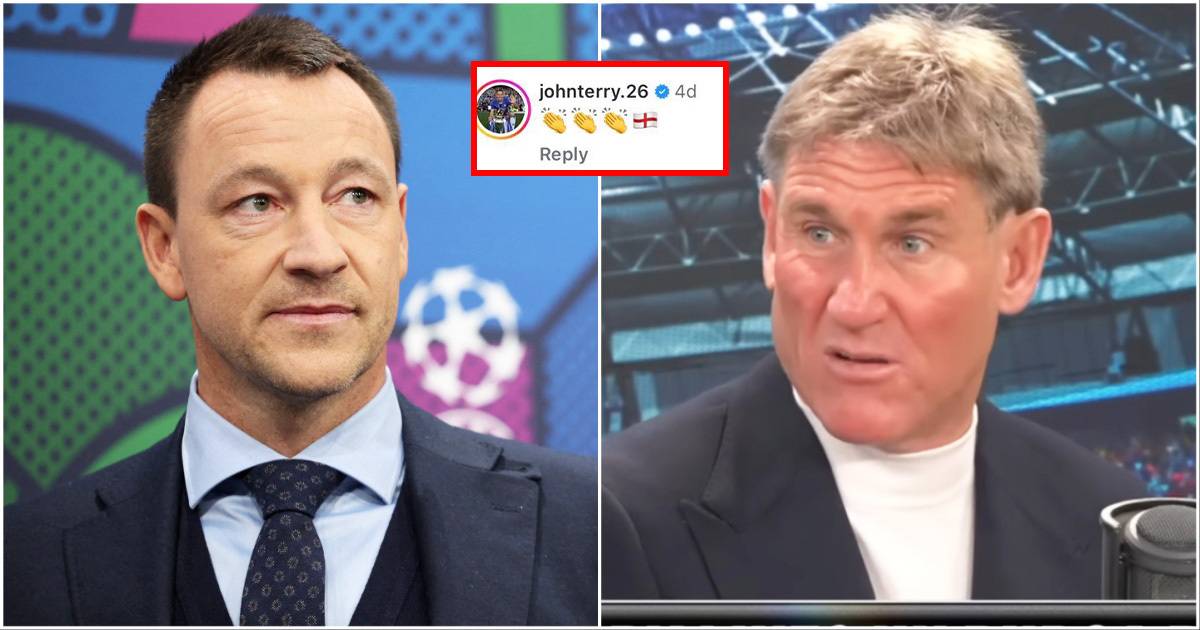
Terry, now a coach in Chelsea’s academy, faced immediate backlash for liking a post by Rupert Lowe’s “Restore Britain” party. Critics, including left-wing commentators and some media outlets, have labeled the action as racist and Islamophobic, with calls for him to be removed from his role working with young players. The incident has placed Chelsea Football Club under intense scrutiny regarding the political conduct of its staff.
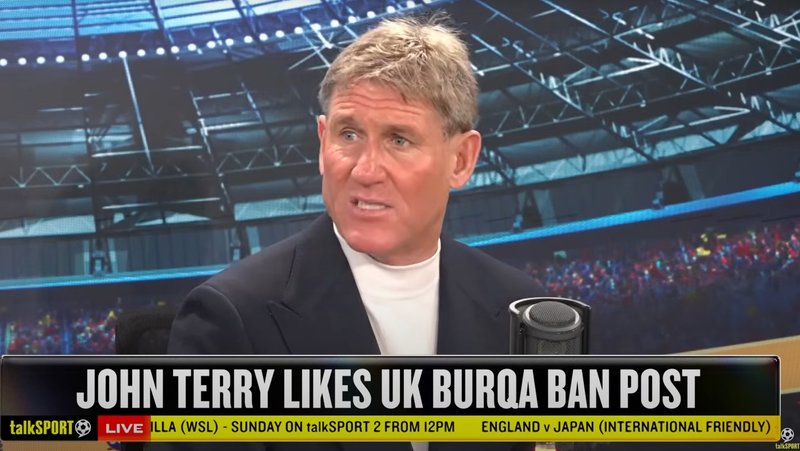
Prominent media personality and former football club owner Simon Jordan has now mounted a robust defense of Terry on his talkSPORT show. Jordan argued that holding a political opinion, even a controversial one, should not disqualify someone from their profession. He emphasized the distinction between personal belief and professional capability.
“Agreeing with a particular principle doesn’t mean that you’re not inclusive,” Jordan stated. “What is inclusive about the burka for everybody else? How is that inclusive for everybody else?” He framed the issue as a matter of societal values and security, questioning the integration of full facial coverings in a modern Western society.
Jordan directly challenged the notion that Terry’s action should jeopardize his coaching position. “It is particularly small-minded to say that because you don’t agree with the principle of something, you’re not going to be able to coach young boys from diverse backgrounds. It’s a ridiculous association,” he asserted, criticizing what he called a “binary world” where disagreement is swiftly branded as bigotry.
The broadcaster also addressed the proposal to rename Tube stations, expressing his own discomfort. “I am not comfortable running around London seeing train stations being renamed in Bengali… That’s not bilingualism, you’re renaming place names in this country.” He argued such policies cater to a lack of assimilation rather than providing helpful translation.
Terry, who has since unliked the post, has not made a public statement. Sources suggest he retreated due to the predictable “storm on the horizon” from what Jordan termed “small-minded people that want to categorize.” This has not quelled the debate, with many seeing his initial like as a tacit endorsement of Restore Britain’s entire platform.
The controversy taps into a wider European political landscape. Proponents of Terry’s implied position point out that France, Belgium, Denmark, Austria, and others have implemented full or partial bans on face coverings in public, often citing security and women’s rights. They argue the opinion is therefore mainstream in a continental context.
Opponents, however, condemn the policy as inherently discriminatory and hostile to religious freedom. They argue that Terry’s support, however fleeting, legitimizes rhetoric that marginalizes the British Muslim community. The Athletic published a critical piece examining the incident, which Terry’s defenders have dismissed as a “hit piece” indicative of media bias.
The core question now gripping football and political circles is whether personal political beliefs should be a determinant of employment, especially in roles influencing youth. Jordan’s intervention firmly argues they should not, framing the backlash as an attempt to silence dissent through career-threatening consequences.
“You can’t live your life in the minds of small-minded people that want to categorize and forever put you in a position where you can be compromised by having a different view,” Jordan concluded, defending Terry’s right to hold a “slightly different” principle without being deemed unfit for his job.
This incident highlights the increasingly fraught intersection of sports, identity politics, and free speech in the UK. With a figure of Terry’s stature at its center, the debate over the burqa, bilingual signs, and the limits of acceptable opinion shows no sign of abating, exposing deep cultural and political divisions within the nation.


