
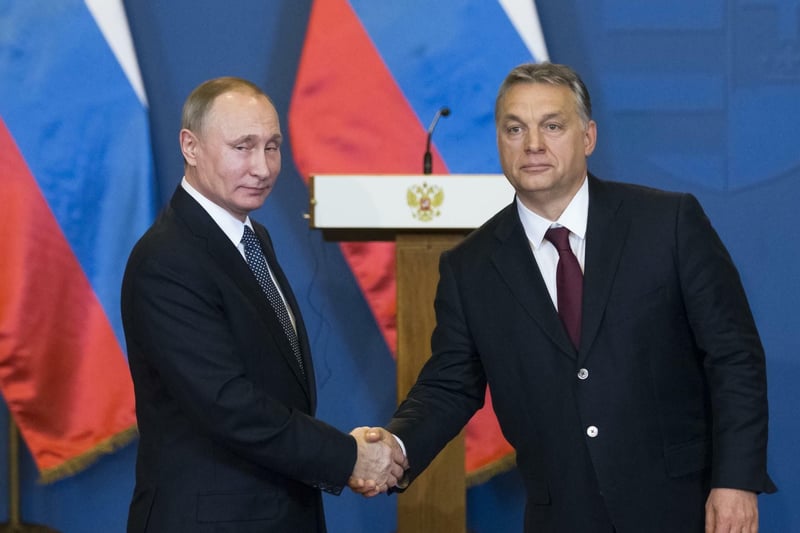
Budapest/Moscow/Brussels – This is the deal that could ultimately split the European Union. On the night from Friday to Saturday, Hungarian Prime Minister Viktor Orbán signed a far-reaching energy and security agreement with Russia in a strictly secret ceremony at the Kremlin. The contract is worth tens of billions of euros and is set to supply Hungary with extremely cheap Russian gas and oil for the next 25 years—under conditions so favorable they would be considered generous even for Belarus.
According to information from sources within the Hungarian government obtained by our editorial team, the “Budapest–Moscow Pact 2026” includes not only long-term supply agreements for fossil fuels, but also close military-technical and intelligence cooperation. In return, Hungary is expected to grant Russian companies preferential access to its energy market and commit to no longer supporting certain EU sanctions against Russia in the future.
“This is not just a slap in the face to all Ukrainian victims,” von der Leyen reportedly shouted. “This is a stab in the back of the entire European Union!”
Viktor Orbán himself appeared completely unfazed in a brief press statement from Budapest. “Hungary has the right to provide its citizens with affordable energy. Anyone who calls this betrayal is betraying the interests of the European peoples,” he said through his spokesperson, Zoltán Kovács. Behind closed doors, Orbán is also said to have remarked: “Brussels can threaten us all it wants. As long as I govern, Hungary will never sacrifice its sovereignty for Mrs. von der Leyen’s green fantasy.”
The deal comes at an extremely sensitive time. Europe is still grappling with the consequences of the Ukraine war, energy prices remain high in many countries, and dependence on liquefied natural gas from the United States and Qatar has driven electricity bills through the roof for ordinary citizens. While Germany and France continue to pursue costly green energy transitions, Orbán has apparently chosen a pragmatic path—at any cost.

European Council President António Costa initially attempted to calm tensions, but is also said to have described the situation internally as “one of the most serious breaches of trust since the founding of the Union.” Several Eastern European countries, including Poland and the Baltic states, have already openly called for Hungary to be excluded from the Schengen Area and for financial sanctions to be imposed.
In Budapest, however, Orbán’s supporters celebrated the deal as a “historic victory of common sense.” Thousands gathered at Kossuth Square, waving Hungarian flags and chanting slogans such as “Orbán Viktor – Defender of Hungary!” Many citizens, who have suffered under high energy prices in recent years, see the deal as long-awaited relief.
“Finally, someone is taking care of ordinary people and not just the green ideologues in Brussels,” said a 54-year-old teacher from Debrecen to our reporter. “Let the Germans heat with wind turbines if they want. We want warm homes and affordable electricity.”
Behind the scenes, tensions are boiling over. Diplomats in Brussels are already speaking of an “Orbán Crisis 2.0” that could push the EU to the brink of division. A senior EU official, speaking on condition of anonymity, told our editorial team: “If we don’t act decisively now, we lose all credibility.
But if we act too harshly, we risk Orbán leading Hungary completely out of the EU. That would set a precedent with devastating consequences.”
Viktor Orbán appears fully aware of the risks. In a closed-door meeting, he is said to have told his closest allies: “The EU needs Hungary more than Hungary needs the EU. That has always been the case and always will be.”
Meanwhile, Ursula von der Leyen is reportedly preparing for open confrontation. Insiders say she is planning an emergency European Council meeting and intends to travel to Budapest personally to “hold Orbán accountable.” Whether such a meeting will take place remains uncertain.
Orbán has repeatedly shown in the past that he does not shy away from confrontation with Brussels.
This deal with Russia could not only secure Hungary’s energy supply for a generation but also reshape the political landscape of Europe. The question now facing the entire continent is: Is Viktor Orbán a traitor—or simply the last true sovereigntist in Europe?
The coming days and weeks will reveal whether the EU is strong enough to handle this open defiance—or whether the “Budapest–Moscow Pact 2026” marks the beginning of the end of European unity.


