

What was supposed to be a concession moment has instead become one of the most talked-about political controversies in Los Angeles.
Following the conclusion of his mayoral campaign, Spencer Pratt released a video that quickly exploded across social media, generating millions of views and sparking widespread speculation about what he claims to know about the city’s political establishment.
Rather than accepting defeat and moving on from politics, Pratt used the video to declare that his campaign had merely been the first phase of a much larger effort.
According to his own statements, running for mayor was never solely about winning office. Instead, he portrayed the campaign as a vehicle for exposing what he repeatedly described as a corrupt political machine operating within Los Angeles.
The tone of the video was confrontational from the beginning. Pratt mocked the idea that losing an election would end his involvement.
He dismissed critics who believed he entered the race merely for attention or political influence and insisted that his objective remained unchanged.

In his view, the election represented only one front in a broader struggle against city leaders, political insiders, and organizations he accuses of profiting from Los Angeles’ probleMs.
His most explosive claim involved alleged recordings. According to Pratt, he possesses recordings involving one of the leading candidates in the Los Angeles mayoral race.
He suggested that the material contains statements or actions so damaging that they could force the individual to resign in disgrace if released publicly.
Although he did not identify specific evidence or provide proof supporting the allegation, the claim immediately became the centerpiece of online discussion.
Pratt implied that he intentionally withheld the recordings during the campaign and originally planned to use them during the general election.
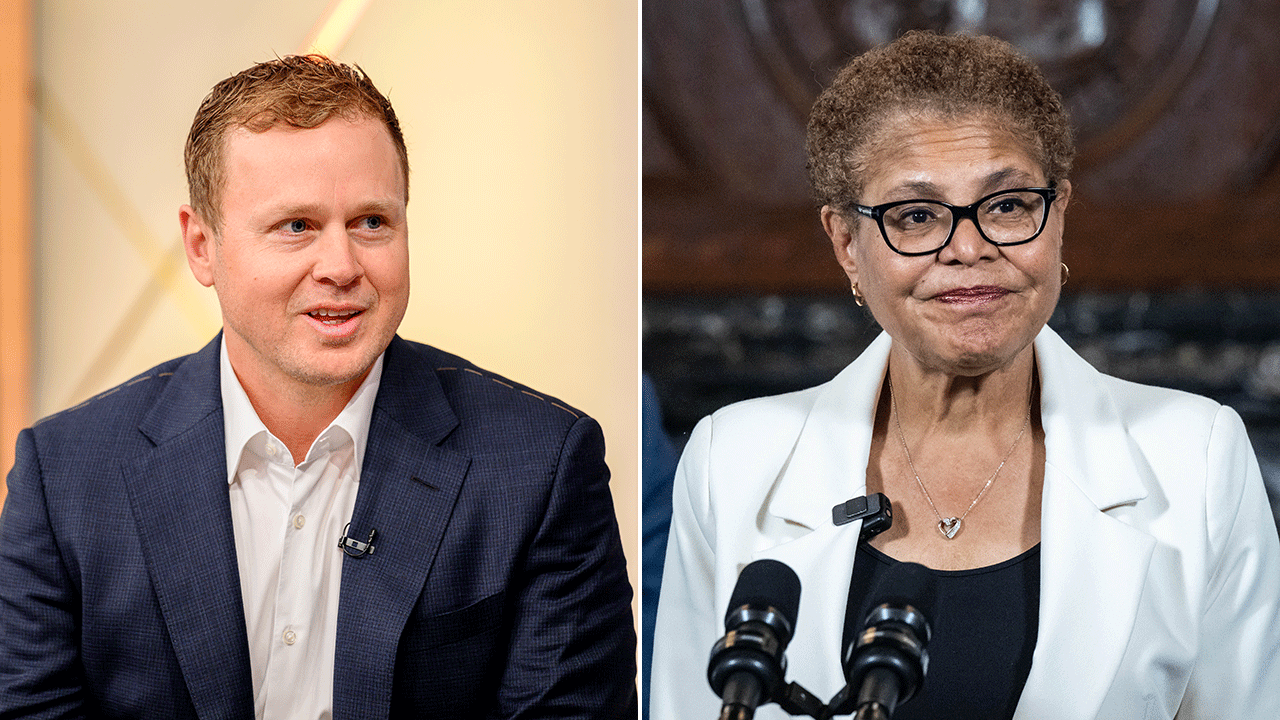
He challenged both Karen Bass and Nithya Raman to consider whether someone within their organizations may have captured damaging material.
The implication was clear: he believes information exists that could significantly alter public perceptions of at least one prominent political figure.
The statement quickly spread across social media platforMs. Supporters interpreted the remarks as evidence that Pratt is preparing to release major revelations.
Critics responded that extraordinary claims require extraordinary evidence and noted that no recordings have yet been made public.
Until documentation emerges, many observers argue that the allegations remain speculative rather than proven. Beyond the recordings, Pratt devoted much of the video to describing what he sees as the decline of Los Angeles.
He painted a bleak picture of the city’s future, citing business closures, homelessness, crime, deteriorating infrastructure, graffiti, public drug use, and economic struggles facing residents.
According to Pratt, current leadership has failed to address these problems effectively, and he warned that conditions could worsen if existing policies continue unchanged.
Particularly notable was his focus on residents affected by recent crises. He referenced families in Pacific Palisades, parents worried about children encountering drug activity near schools, and business owners struggling to remain financially viable.
Throughout the speech, he argued that ordinary Angelenos have paid the price while politicians and organizations allegedly benefit from taxpayer-funded programs and public dysfunction.

One of the most dramatic moments came when Pratt referenced potential federal investigations. He claimed that certain public officials should be concerned about future visits from federal agents and suggested that investigations are already moving in that direction.
The remarks created another wave of speculation online, with supporters treating them as evidence of ongoing inquiries and critics dismissing them as political rhetoric designed to generate attention.
Importantly, Pratt did not provide documentation confirming any specific investigation, nor did he identify evidence establishing wrongdoing by any particular official.
Nevertheless, the comments fueled further discussion among audiences already skeptical of city government and interested in allegations of corruption.
The controversy intensified because it arrived amid ongoing debates regarding election procedures in Los Angeles.
Various commentators connected Pratt’s remarks to broader discussions involving mail-in ballots, vote counting timelines, voter registration practices, and election administration.

Some supporters questioned how election results evolved after additional ballots were counted. Others emphasized that late-counted ballots are a routine feature of California elections and do not, by themselves, indicate wrongdoing.
The video also referenced reporting involving voter registration activities among homeless populations. Particular attention focused on allegations that some individuals were offered incentives in exchange for signatures or participation in petition drives.
Previous federal cases involving voter registration misconduct have been cited by critics as evidence that stronger oversight may be necessary.
At the same time, election officials consistently note that isolated violations do not automatically demonstrate widespread election fraud.
Much of the discussion surrounding the video quickly moved beyond Los Angeles politics and into larger national debates.
Questions about election integrity, public trust, homelessness spending, government accountability, and institutional transparency all became intertwined with Pratt’s message.
Supporters argue that these issues deserve continued scrutiny. Opponents counter that suspicion should not replace evidence and that accusations must be supported by verifiable facts.
Another factor contributing to the video’s popularity was its style. Rather than delivering a traditional concession speech, Pratt adopted the tone of a political insurgent preparing for a new battle.
The speech was filled with dramatic language, direct attacks on opponents, and promises of future revelations.
For supporters, the approach conveyed determination and authenticity. For critics, it resembled political theater designed to maximize attention.
Regardless of perspective, the strategy succeeded in generating engagement. Millions of viewers watched the video within a short period, and discussions spread across political communities nationwide.

The reaction demonstrated how modern political communication increasingly relies on viral content, emotional appeals, and direct engagement with audiences outside traditional media channels.
Perhaps the most significant question remains unanswered. If Pratt truly possesses recordings capable of forcing a resignation, will they ever become public?
And if they do, will they support the extraordinary claims he has made? Until evidence emerges, speculation will continue to dominate the conversation.
Political opponents will dismiss the allegations as unsubstantiated, while supporters will continue anticipating a major disclosure.
For now, one reality is undeniable. Spencer Pratt’s campaign may be over, but the political battle he describes is not.
Whether he ultimately becomes a catalyst for new investigations, a vocal opposition figure, or simply a controversial commentator remains to be seen.
What is certain is that his latest video has ensured he remains at the center of Los Angeles political discussions long after election day has passed.
