
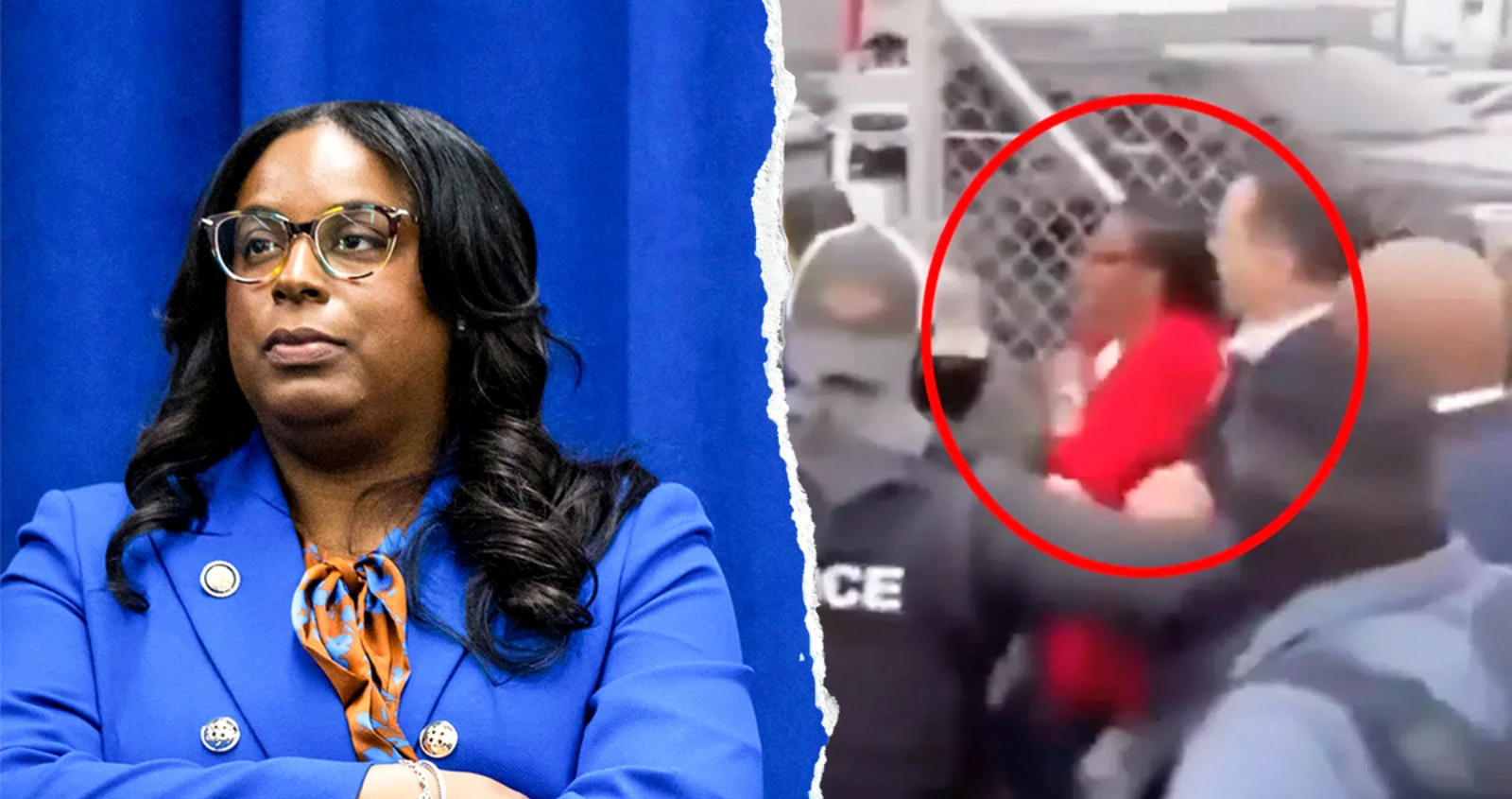
Rep. LaMonica McIver (D-N.J.) is facing significant political and legal consequences after being indicted by a federal grand jury on three counts, including assaulting and interfering with Immigration and Customs Enforcement (ICE) officers during a May 9 incident at the Delaney Hall Immigration Facility in Newark.
According to federal prosecutors, McIver and two other Democratic lawmakers were conducting an official oversight visit to the facility when the visit overlapped with a protest. Newark Mayor Ras Baraka allegedly entered a secured area inside the building. Federal agents warned him to leave, and when they attempted to arrest him, McIver reportedly intervened by wrapping her arms around the mayor, slamming her forearm into one officer, and grabbing another.
McIver has pleaded not guilty to the charges and is scheduled to stand trial on November 10. She has described the indictment as an act of political intimidation and accused the Trump administration of weaponizing the Department of Justice against Democratic critics.
In response to the indictment, Rep. Clay Higgins (R-La.) introduced a resolution calling for McIver to be censured by the House and removed from the House Homeland Security Committee. Higgins argued that her continued service on the committee would represent a “significant conflict of interest,” given that she faces charges for allegedly committing crimes against officers under the jurisdiction of the Department of Homeland Security, which the committee oversees.
The resolution also references House rules requiring members to “behave at all times in a manner that shall reflect creditably on the House.” Higgins noted that House Republicans generally require indicted members to step down from all committee assignments, while Democrats typically only require them to relinquish leadership positions.
McIver responded to the censure resolution by calling Higgins a “bigot” and accusing him of attempting to shame her for performing oversight work. She maintained that her actions were part of her official duties as a member of Congress.
The case has added to a growing list of confrontations between Democratic lawmakers and federal immigration enforcement officers in recent months. It has also intensified debate over how Congress should handle members who face serious criminal charges, particularly when those charges involve alleged interference with federal law enforcement.
If passed, the resolution would represent one of the strongest congressional rebukes of a sitting member in recent years and could set a precedent for how future cases involving lawmakers and federal officers are handled.


