
MP Esther McVey Blasts Government’s Grooming Inquiry, Alleges Systemic Institutional Cover-Up
In a highly charged parliamentary debate, Conservative MP Esther McVey delivered a scathing critique of the government’s official inquiry into grooming gangs, accusing public institutions of turning a blind eye to the severe abuse of vulnerable young girls due to political sensitivities regarding ethnicity, religion, and immigration status.
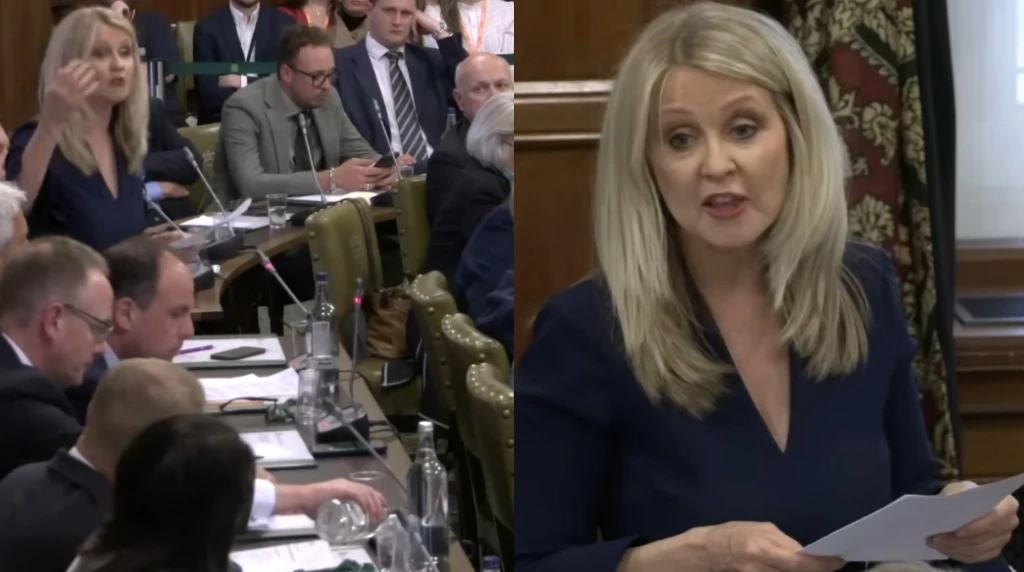
Controversy Over a “Rigged” Inquiry Panel
Addressing the committee, McVey expressed deep frustration over the current state of the government’s official investigation into the grooming gang scandals. She argued that the inquiry has moved at a “glacial pace” and has been fundamentally compromised by the appointment of establishment insiders.
McVey criticized the decision to appoint a Labour peer to chair the inquiry, alongside panel members who previously held prominent institutional roles, including a former council chief executive and an NHS Foundation Trust chair. She emphasized that handing the investigation over to individuals from the “very institutions under investigation” directly violates the explicit wishes of the abuse survivors .
An Alternative Investigation
Contrasting the government’s approach, McVey highlighted an independent rape inquiry initiated by the MP for Great Yarmouth, which recently concluded 10 days of evidence gathering and is set to publish its findings soon.
Serving as a panel member on this independent inquiry, McVey recounted the harrowing testimonies provided by survivors. She detailed accounts of extreme and prolonged physical torture, describing victims who were “battered, strangled, cut, whipped until they were close to death, and then brought back round to be raped again” .
Institutional Neglect and “Political” Paralysis
The core of McVey’s accusation centered on the systemic failure of state-funded institutions meant to protect these children. She noted that many victims were in the care of children’s homes—facilities paid thousands of pounds a week—yet their pleas for help were ignored .
According to McVey, authorities failed to intervene because the victims were predominantly vulnerable, “white working-class girls” who were dismissed by those in power as “white trash” . Concurrently, she alleged that investigators intentionally looked the other way because the perpetrators were viewed as “elders in a community” who were treated as “above reproach”. She directly attributed this inaction to a pervasive institutional fear of questioning matters of religion and ethnicity .
Anticipating political pushback, McVey firmly defended her position, stating that the exposure of these failures is “not a political football, a right-wing bandwagon, or a dog whistle issue” . She concluded her address by demanding truth for the survivors and insisting that the protection of children must supersede institutional reputations


