
Opening the broadcast, GB News presenter Nana Akua launched a staunch critique against Prime Minister Keir Starmer and the mainstream media for labeling the “Unite the Kingdom” rally as a “far-right” movement—a term traditionally defined by extreme nationalism and authoritarian tendencies.
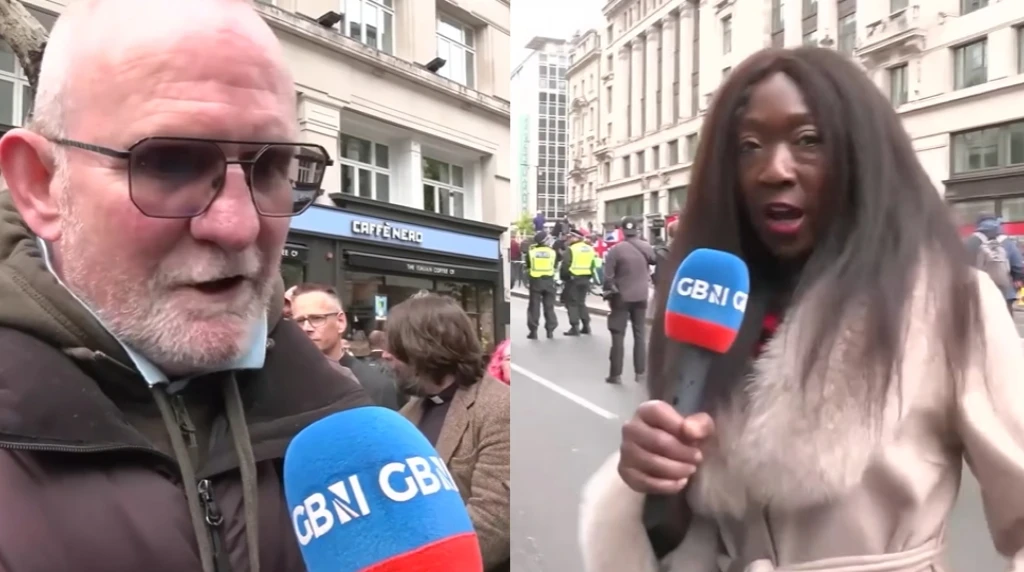
To verify the claims, Nana Akua took to the streets to join the march firsthand. Through on-the-scene interviews, participants—including a Church of England clergyman—firmly asserted that they do not belong to the far-right. They stated that their primary objective is to advocate for the British people, oppose open-border policies, and demand that the government fulfill its manifesto commitments rather than pushing controversial agendas such as digital IDs and unchecked immigration.
They expressed a collective desire to protect “a bright future for their children and grandchildren,” while preserving their culture and patriotism. When questioned on whether advocating for border control should be deemed a far-right stance, one protester emphasized: “Absolutely not… There is nothing wrong with wanting to control your own country’s borders”.
As a Black woman, Nana Akua shared her personal observation: “If this were truly a far-right march, I certainly wouldn’t be welcome… If anything, I am more at risk of being ‘hugged to death’ by the friendliness here”. She underscored that the vast majority of attendees are simply patriotic citizens who want the government to prioritize the interests of its own people.
Former Labour MP Issues Stern Warning
During the panel debate, former Labour MP Graeme Jones offered a cautious perspective on how the administration has handled the demonstration.
Responding to Prime Minister Starmer’s decision to issue entry bans against 11 speakers on the grounds that they were “far-right agitators,” Jones stressed the vital need to protect free speech. He noted: “I am very reluctant to ban any speaker… Doing so could set a dangerous precedent”.
On policing and security, the presenter pointed out an apparent double standard: authorities deployed facial recognition cameras at the “Unite the Kingdom” rally but refrained from doing so at the concurrent pro-Palestine (Nakba) demonstration. Jones admitted that this discrepancy reflects poorly on the administration. He warned: “The government must treat all citizens equally… Failing to do so only leaves them wide open to accusations of operating a ‘two-tier’ system”.
Jones also rejected the casual deployment of the “far-right” label to dismiss dissenting voices. He argued that since the majority of the British public does not support open-border policies, demanding immigration control cannot be deemed an extremist ideology. “Those who resort to labels are usually those who lack a strong enough argument… It is far better to go out there and win with arguments rather than labeling people,” he asserted.
Concurrent Event: Wes Streeting Formally Launches Leadership Bid
Alongside the protest controversies, the GB News broadcast highlighted another major political development: Wes Streeting has officially announced his candidacy for the leadership of the Labour Party, piling further internal pressure on the incumbent Prime Minister, Keir Starmer.


