
Katie Hopkins didn’t file a court claim. She fired a flare.
“He lied to Parliament,” she says, and suddenly British politics becomes what social media loves most: a countdown, a document, and a demanded resignation.
This matters before we even touch the “email.” Because the accusation isn’t aimed at a policy. It’s aimed at Westminster’s one unforgivable sin: misleading the House.
If a Prime Minister is shown to have knowingly misled Parliament, the story moves from “bad optics” to “career-ending,” fast, and everyone in politics knows it.
Keir Starmer is the current Prime Minister. That’s not gossip, that’s the official record.

Hopkins claims she has an email proving Starmer signed off a deal personally—after allegedly telling the country he knew nothing about it. She also claims she’ll “release the timeline tonight.”
Here’s the hard truth: right now, what’s circulating is an allegation about a document, not a document that has been authenticated in public by credible, checkable means.
But politics doesn’t wait for authentication. It waits for momentum. And “I have the email” is the modern equivalent of “I have the tapes.”
The genius of the claim is that it forces two reactions at once: believers start sharpening knives, skeptics start demanding receipts, and everyone else starts refreshing their feed.
Downing Street, in this kind of moment, has two bad options. Ignore it and look guilty. Respond too quickly and look panicked. Either way, the narrative hardens.
Hopkins also throws in “misconduct in public office,” which isn’t just a spicy phrase. It’s a serious allegation of wrongdoing by a public official.
But the legal bar for criminal misconduct is not the same thing as the social-media bar for “he should resign.” The internet doesn’t need proof beyond doubt.
Westminster’s culture runs on a different kind of proof: the impression that someone crossed the line and the House won’t tolerate it.
That’s why “lied to Parliament” hits like a hammer. The Ministerial Code explicitly ties ministerial conduct to honesty and accountability, and misleading Parliament is treated as grave.
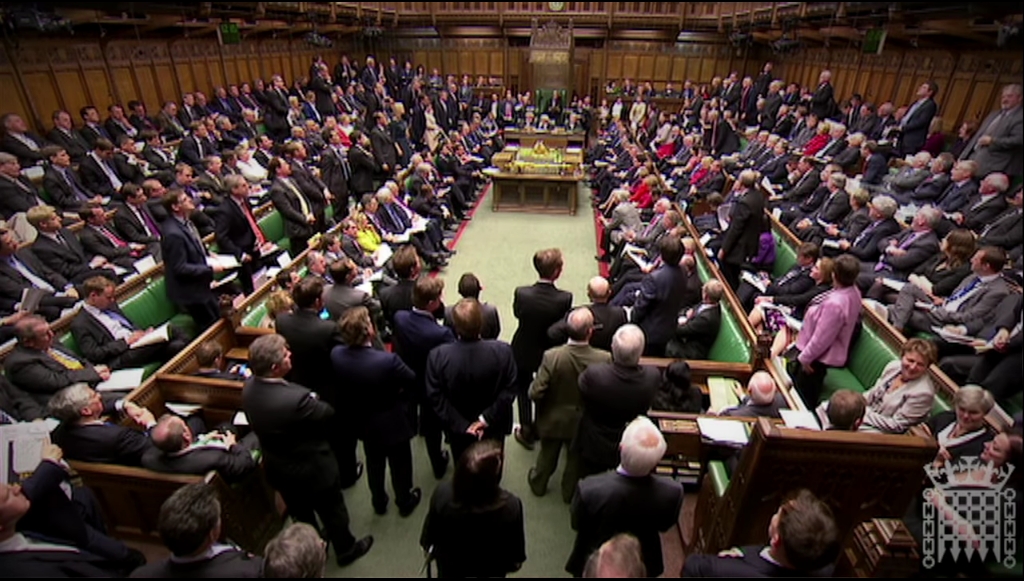
The despatch box isn’t a prop. It’s the stage where power claims legitimacy. When someone says a Prime Minister lied there, they’re attacking the legitimacy itself.
And that’s where this stops being about Hopkins. The bigger story is how “evidence” is now performed for the public, not submitted to the public.
A leaked email—real or fake—works because it looks like reality escaping control. The timestamp becomes the plot. The date becomes the noose.
Notice the emotional engineering: “he thought no one would check the dates.” That line doesn’t prove anything. It creates a villain who underestimated the crowd.
So what is the crowd supposed to do? Not wait for an inquiry. Not read the fine print. Just demand the resignation “before the weekend.”
This is the new British ritual: the resignation deadline as entertainment. The weekend becomes a guillotine schedule.
It’s also happening in a political climate where Starmer’s leadership has been under intense scrutiny in recent reporting, which makes any “cover-up” storyline easier to sell.

Now zoom in on the “deal” itself—because the word is doing a lot of work while revealing almost nothing. A “deal” can mean policy, diplomacy, procurement, a party truce, anything.
That vagueness is not a bug. It’s a feature. It lets readers plug in their own fear: migrants, NATO, taxes, national security, you name it.
Hopkins adds “national security” for maximum heat. In politics, those words are the fastest way to make a technical dispute feel existential.
And once you say “national security,” you also imply secrecy—so any missing details become “evidence of the cover-up,” not evidence of complexity.
But here’s the catch: secrecy is also where real governance lives. Not everything can be live-streamed, and not every redaction is corruption.
That’s what makes this genre so poisonous. It weaponizes a truth—governments sometimes hide things—to sell a leap: therefore, this specific thing is a scandal.
So what would “real proof” look like here? Not a cropped screenshot. Not a Telegram-forwarded PDF. Provenance, metadata, context, and independent verification.
If the email exists, serious journalists will ask: who authored it, who received it, what system it came from, and whether it’s complete or selectively framed.
And if it doesn’t exist, the damage won’t vanish. Because even a disproven leak leaves a residue: “they had to deny it,” “they got caught scrambling.”
That’s why Parliament matters as a shield and a sword. Parliamentary privilege protects free speech in proceedings, which can turbocharge accusations without the same legal risk.
The public hears, “It was said in Parliament,” and assumes it’s inherently more credible. The reality is more complicated: privilege is about scrutiny, not automatic truth.
So the key question becomes painfully simple: will Hopkins publish something verifiable, or just something shareable?
Because “timeline tonight” can mean anything from a fully sourced, date-stamped chain of documents to a dramatic thread with bold arrows and implied connections.
And the audience, trained by years of chaos, often can’t tell the difference in the moment. By the time it’s clarified, the outrage has already moved on.
Downing Street can survive many things. It can survive a policy U-turn. It can survive a bad week. What it struggles to survive is the feeling of dishonesty.
That’s why this attack is so strategically placed. It targets the one thing that turns supporters quiet and rivals hungry: a credibility wound.
If the email is real and damning, the consequences are obvious: relentless parliamentary pressure, demands for disclosure, and a leadership crisis that becomes structural.
If it’s flimsy, the consequences are still obvious: another week where politics becomes content, and the public learns again that “truth” is something you pick.
Either way, the “resign before the weekend” demand isn’t a legal conclusion. It’s a narrative deadline—designed to make hesitation look like guilt.
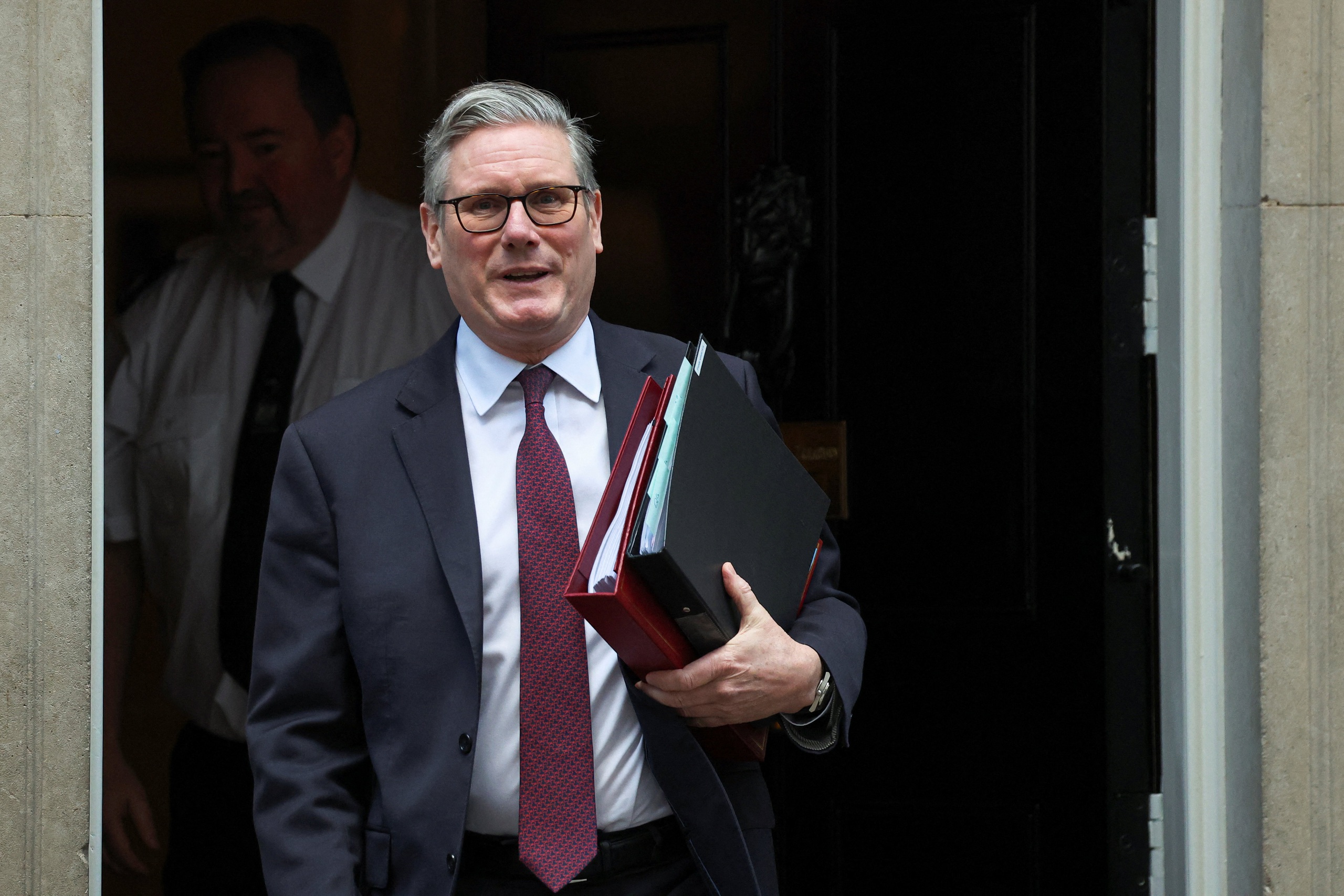
The real drama, then, isn’t the document. It’s what happens in the hours after the claim: who echoes it, who distances, who asks questions, who pretends they never saw it.
Because in Westminster, scandals aren’t only proved. They’re adopted. And once enough MPs decide a story is useful, it becomes real in the only way that matters.
So watch for the shift: when the conversation moves from “is it true?” to “is it sustainable?” That’s when resignations start to feel inevitable.
And if you want the cleanest read on what’s unfolding, don’t follow the shouting. Follow the paperwork: official statements, parliamentary questions, and whether any evidence is released in full.
Until then, treat “I have the email” as what it currently is: a high-voltage allegation aimed at the weakest point of any government—trust.


