
Is This Keir Starmer’s Final Prime Minister’s Questions? The Growing Pressure on Labour
At Prime Minister’s Questions, Conservative MP Robin Swann stood up and asked a question that would have been unthinkable just months ago: could this be Keir Starmer’s last PMQs? The moment captured a growing sense that the government is struggling to maintain public confidence.
Swann did not simply attack Starmer’s record. He listed specific groups he believes have been let down — WASPI women, farmers, Northern Ireland veterans, and victims of the Troubles — before asking whether the real problem lies with those around the Prime Minister who appear more focused on internal politics than on governing the country.
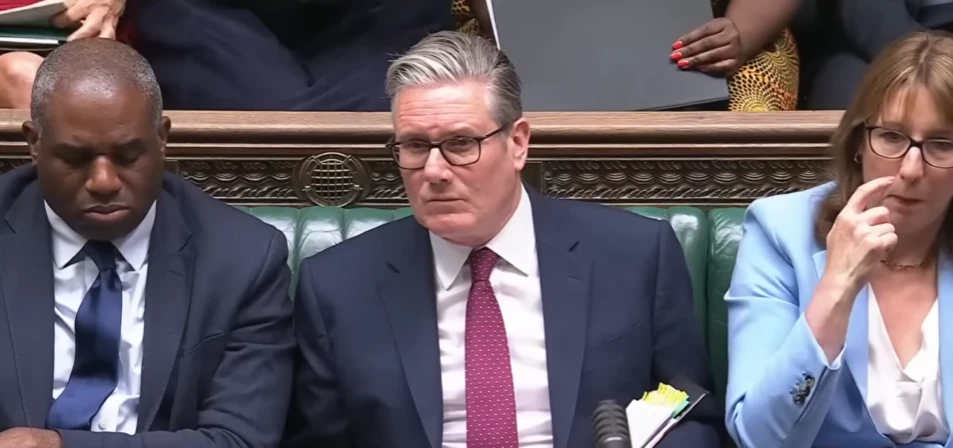
Starmer’s Response
Starmer did not directly address the question of why public trust has declined so quickly. Instead, he listed what he described as the government’s achievements: the biggest upgrade to workers’ rights in a generation, improvements to renters’ rights, and action to reduce child poverty.
For critics, the answer missed the point. Swann was asking why so many people feel the government has gone wrong so fast. Starmer’s reply focused on legislation passed rather than the lived experience of many voters struggling with the cost of living, energy bills, and a sense that their concerns are being ignored.
The fact that an MP felt able to ask openly in the House of Commons whether this could be Starmer’s final PMQs is significant. It reflects a shift in the political atmosphere. Questions that once stayed in briefings or on social media are now being raised directly in Parliament.
The Energy Policy Criticism
In a separate debate, Conservative MP Joe Robertson turned his fire on Labour’s energy record. He pointed out that during the election campaign, Labour promised to cut household energy bills by £300. Instead, he argued, bills have risen.
Robertson acknowledged that the previous Conservative government made mistakes but argued that blaming the last administration can no longer serve as a permanent excuse. He described some green levies as “bonkers” and claimed they ultimately harm ordinary families by pushing up costs that are passed on to consumers.
Labour has defended its approach by pointing to global energy markets and the need for long-term investment in clean energy. However, for many households, the immediate reality is higher standing charges and rising bills. The gap between the promises made before the election and the reality since has become a significant point of attack.
Taken together, these two moments highlight a broader criticism of the government. Critics argue that Labour came to power promising competence, moderation, and real change, but has instead delivered a series of policy reversals and broken pledges.
Leadership is not just about holding the title of Prime Minister. It also depends on whether people believe you are still in control of events and understand why public confidence is slipping.
When MPs begin asking in the House of Commons whether this could be your final PMQs, it signals that the authority of the Prime Minister is already under pressure. Starmer’s response — focusing on what the government is proud of rather than directly addressing why trust has eroded — did little to change that perception.
Whether Starmer can regain the initiative remains to be seen. What is clear is that the questions about his leadership are no longer being asked only in private. They are now being asked openly in Parliament.


