
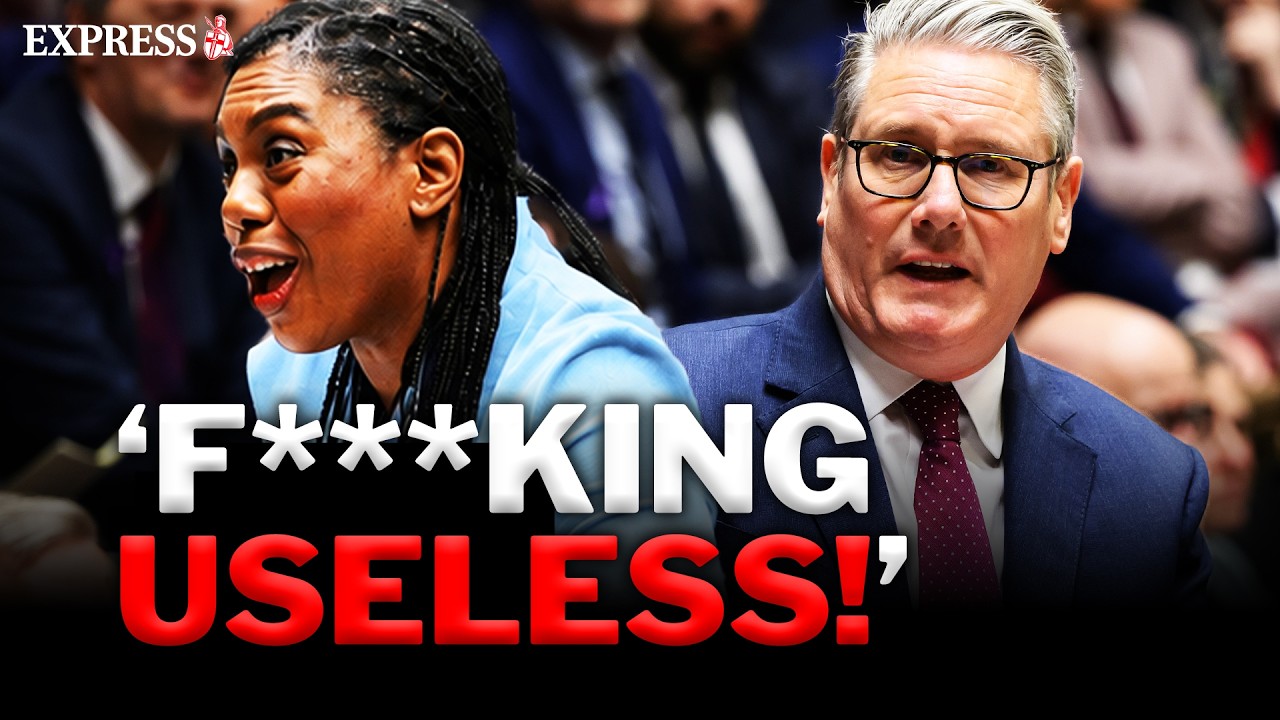
Opposition leader says Starmer is “in office but not in power” as Labour crisis overshadows King’s Speech debate
Britain’s political instability deepened dramatically during the parliamentary debate on the King’s Speech after the Conservative leader delivered a sweeping attack on Prime Minister Keir Starmer, describing him as “in office but not in power” and warning that the Labour government is collapsing less than two years into its term.
Speaking in the House of Commons, the opposition leader said the King’s Speech was taking place against an “extraordinary backdrop,” suggesting that while the ceremonial arrangements had been prepared, the key question in Westminster was whether the country would even still have a functioning Prime Minister.
The speech came amid escalating turmoil inside the Labour Party, following the resignation of senior ministers and a growing rebellion among MPs. The Conservative leader claimed that in the previous 48 hours alone, nearly 100 Labour MPs had publicly called for Starmer to resign, while four ministers had quit their posts.
“It is clear his authority has gone,” she said, arguing that Starmer would be unable to deliver even the limited programme outlined in the King’s Speech.
The opposition leader described the government as having “run out of ideas and run out of road,” portraying Labour as politically exhausted despite being in office for less than two years.
Conservatives accuse Labour of entering government without a plan
A central theme of the Conservative response was that Labour’s crisis stems from what the opposition described as a fundamental failure to prepare for government.
The Conservative leader argued Labour confused the act of winning an election with the challenge of governing, claiming the party entered office with “no plan” and little understanding of the country’s structural problems.
Quoting a line from the musical Hamilton, she said: “Winning is easy. Governing is harder.”
According to the opposition, Labour’s manifesto contained promises that were politically convenient but economically unrealistic, including pledges to freeze council tax, cut energy bills, and deliver compensation commitments to groups such as WASPI women.
The Conservative leader claimed Labour MPs promoted these promises during the election campaign without ever developing a credible strategy to implement them.
She argued Labour assumed governing in the 2020s would resemble governing in the 1990s, failing to grasp the scale of the challenges Britain now faces, including demographic decline, an ageing population, and a welfare bill rising sharply.
Attack focuses on welfare, AI disruption, and energy costs
The opposition leader claimed Britain is facing “new structural problems” that Labour is failing to confront.
Among the issues cited were falling birth rates, rising dependency on welfare, and what she described as an “information revolution” driven by artificial intelligence, which she warned could reshape employment and destabilise the labour market.
She also argued that energy costs are driving British industry out of the country, and that Labour has not responded with a serious plan to lower prices or improve competitiveness.
She accused the government of making “misleading promises” and failing to deliver on core pledges, including commitments not to raise taxes on working people, to crack down on illegal immigration, and to reduce state interference in daily life.
“Epic fail,” she said.
Labour mocked for internal chaos and leadership revolt
The speech repeatedly returned to Labour’s internal crisis, with the Conservative leader accusing the government of being paralysed by factional conflict and resignation threats.
She claimed Starmer is presiding over a government that cannot govern itself, telling MPs: “They want to lead our country. They can’t even lead a coup.”
She described Labour backbenchers as increasingly horrified, forced to defend “the indefensible” in their constituencies as the government’s credibility collapses.
The Conservative leader also mocked Labour’s leadership contenders, describing a future contest as “months of peacocking” while the country is left without effective governance.
In a series of sarcastic remarks, she referenced potential candidates such as Angela Rayner, Wes Streeting, and Andy Burnham, portraying them as politically weak or scandal-prone.
She claimed Labour MPs had been treated as “disposable,” with some having the whip removed for supporting or opposing policy positions, only for the government to later reverse course.
She said Labour’s internal disorder had become so severe that some MPs allegedly did not even know they were listed as Starmer supporters.
“When you can only get a quarter of your MPs to publicly back you, the game is up,” she said.
Conservatives list Labour U-turns as evidence of weak leadership
The opposition leader argued Labour’s first parliamentary session was defined by indecision and reversals, claiming the government had made 24 U-turns.
She cited issues including winter fuel payments, family farms, welfare reform, grooming gang investigations, and proposals around social media restrictions for under-16s.
She argued these reversals all stemmed from what she described as Starmer’s “total lack of judgement.”
In one of the most pointed moments of the speech, she mocked Starmer for turning to former Prime Minister Gordon Brown during a political crisis, suggesting it demonstrated a lack of vision and leadership.
“This is a man who faced with a crisis… sent for Gordon Brown,” she said, drawing laughter from Conservative MPs.
Support for Ukraine and NATO acknowledged
Despite the confrontational tone, the Conservative leader also acknowledged areas of agreement with Labour, including continued support for Ukraine and the government’s commitment to NATO.
She said Britain must stand with its allies against “tyranny” in an increasingly dangerous world, signalling that national security could remain a point of bipartisan cooperation despite domestic instability.
She also welcomed Labour’s commitment to speeding up major infrastructure projects, including nuclear development, describing it as a long-standing challenge for successive governments.
However, she warned that even these efforts could be undermined by the government’s instability, particularly as leadership changes appear increasingly likely.
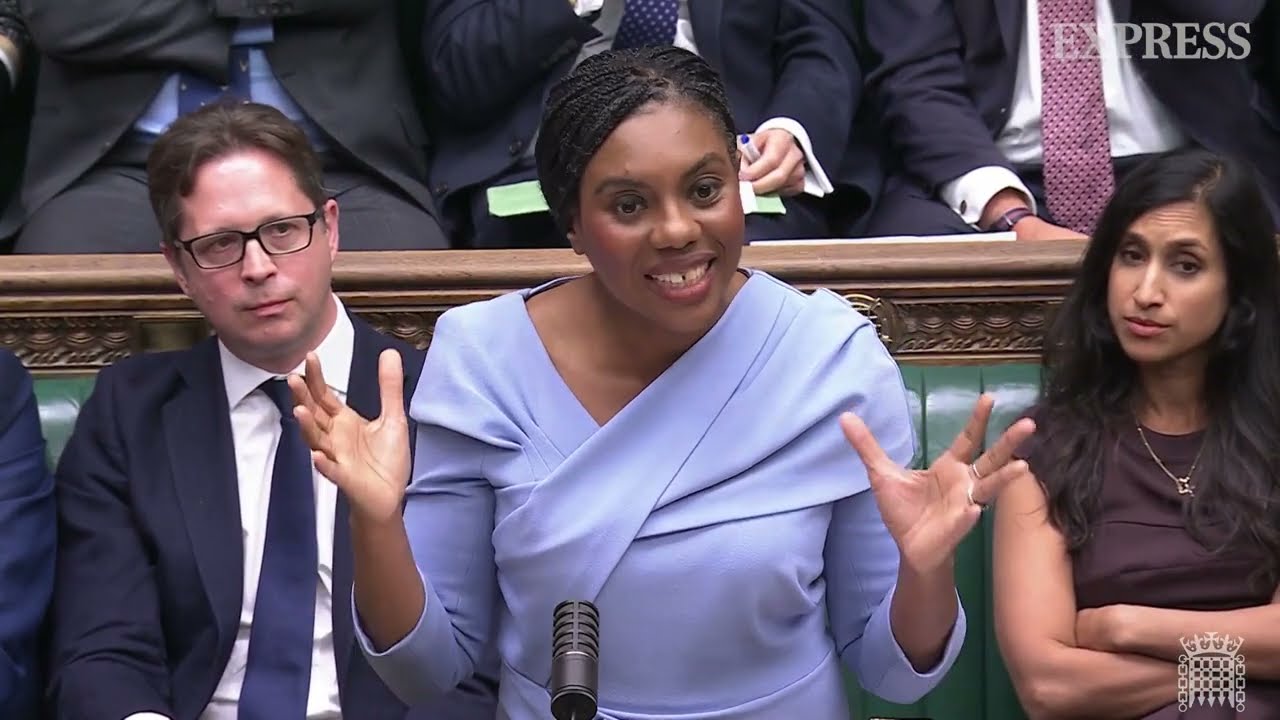
Criticism of King’s Speech agenda: “reannounced policies” and “class war”
The opposition leader accused Labour of filling the King’s Speech with recycled announcements rather than new solutions.
She criticised proposals such as legislating for digital ID, banning trail hunting, and pursuing legal action against military veterans, describing them as ideological distractions rather than reforms that improve daily life.
She also attacked Labour for scrapping NHS England, noting that the Prime Minister had announced the idea more than a year earlier, implying it was not a fresh policy but an attempt to repackage old plans.
She argued the government had failed to include key priorities in the King’s Speech, including a defence readiness bill, welfare reform proposals, and a credible programme of savings.
Labour, she claimed, only understands how to spend “other people’s money,” and lacks any serious plan to support businesses or drive growth.
Conservative alternative programme: net zero, welfare, and immigration overhaul
The opposition leader used the speech to outline what she described as an alternative Conservative agenda, claiming her party had published an “alternative King’s Speech” to demonstrate what a serious government programme would look like.
She said Conservatives would reduce energy bills by scrapping net zero legislation that she argued is “strangling industry.”
She also said Conservatives would introduce a “Get Britain Working” bill, aimed at rolling back employment laws and limiting trade union power.
On immigration, she argued Britain must leave the European Convention on Human Rights (ECHR) and repeal the Human Rights Act, claiming courts and international agreements have blocked deportations and prevented ministers from controlling borders.
She argued the government must regain authority from “activist lawyers” and international frameworks, allowing ministers rather than judges to determine who can enter and remain in the country.
The opposition leader also stressed the need to reduce welfare spending and dramatically increase defence investment, proposing a sovereign defence fund to rebuild Britain’s defence industrial base.
Warning of public anger and political fragmentation
One of the most striking themes of the speech was the opposition leader’s warning that the public is increasingly angry not just with Labour, but with the entire political establishment.
She argued that voter frustration is fuelling political insurgencies and protest movements, implying that the rise of disruptive political forces is a symptom of wider governance failure.
“The country is angry with the entire political class,” she said.
She urged MPs to stop focusing on internal party battles and instead confront the deeper structural failures of government, regulation, and bureaucracy.
In her view, Britain is not “ungovernable,” but is being held back by systems that prevent elected governments from delivering meaningful change.
Labour instability overshadows national agenda
The parliamentary exchange underscored the scale of the crisis facing Labour. The opposition leader argued it was “preposterous” for the government to present a legislative programme while ministers resign and a large proportion of its MPs demand the Prime Minister’s removal.
She argued the situation is logically unsustainable: either Labour MPs support the government’s agenda and should stop plotting, or they reject it and should admit the Prime Minister has lost legitimacy.
Her conclusion was blunt: Starmer’s time is running out, but whoever replaces him will inherit a deeply divided party and a country facing major economic and geopolitical pressure.
The debate, intended as a traditional parliamentary response to the King’s Speech, instead became a stark reflection of a government in crisis — and a political system that appears to be entering a new and unstable phase.


