
SEATTLE MAYOR KATIE WILSON FACES BACKLASH FROM OWN DEMOCRATIC ALLIES
In a stunning political earthquake rocking Seattle City Hall, two Democratic council members have stepped forward in rapid succession to openly challenge Mayor Katie Wilson’s handling of the city’s mounting economic crisis and her now-infamous public dismissal of departing millionaires.
The fractures appeared within days of each other, less than six months into Wilson’s term, as her own party colleagues distanced themselves from remarks that have been widely viewed as dismissive and arrogant.
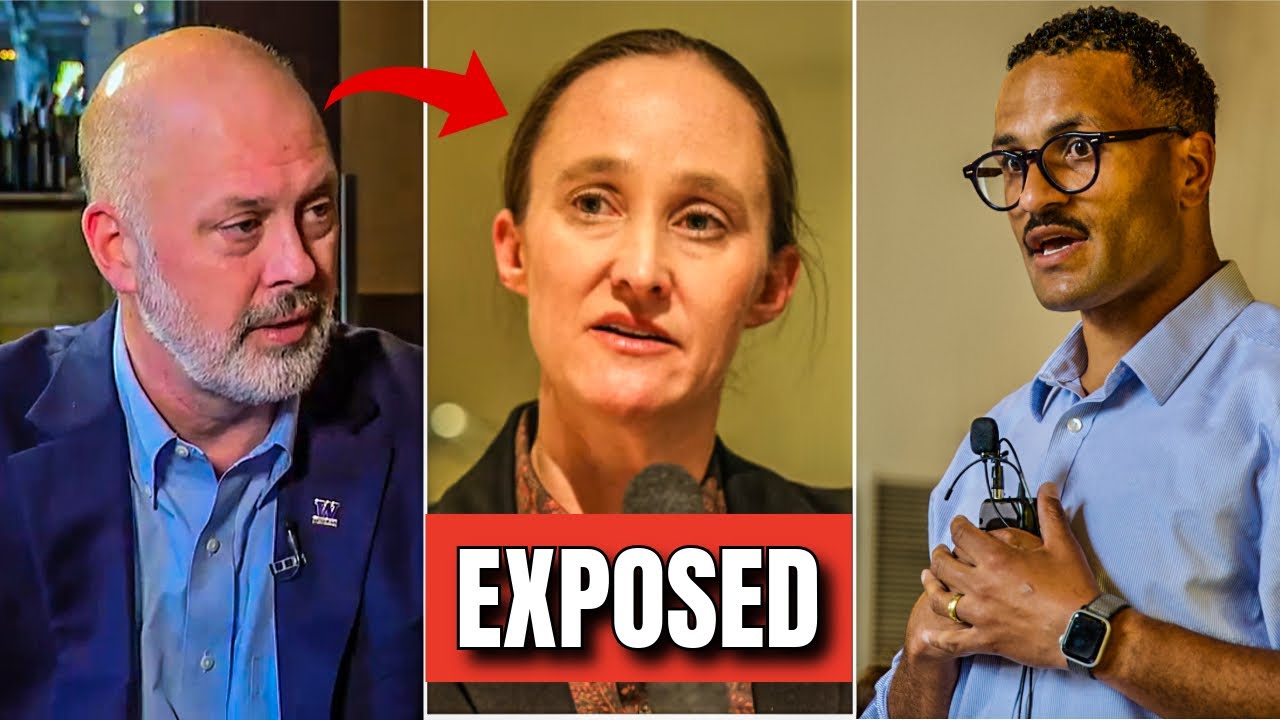
What began as a single viral clip of the mayor laughing and waving goodbye to wealthy residents fleeing high taxes has exploded into a broader reckoning, exposing deep rifts inside the Democratic ranks and raising urgent questions about leadership at a time when major employers are packing up and heading for the exits.
The controversy ignited when Mayor Wilson stood on a picket line with striking Starbucks baristas, declaring solidarity with workers and rejecting concerns about millionaires leaving the state as “super overblown.”
With a casual wave and the words “if you know the ones that leave like bye,” she appeared to brush off the potential loss of high-income taxpayers and the jobs they support.
The moment spread rapidly across social media and news outlets, drawing sharp criticism even from within her own party.
For many observers, the optics were disastrous: a mayor seemingly celebrating or at least indifferent to the departure of the very people whose taxes fund city services, all while standing alongside workers whose livelihoods depend on a thriving local economy.
Councilman Rob Saka, a Democrat representing the district that includes much of Starbucks’ headquarters, broke his silence in a pointed interview with Seattle reporter Randy Diamond.
Saka did not mince words about the human cost of businesses relocating.
“I do find it gravely concerning when any major employer picks up its crayons and heads to another play box and takes jobs with it,” he said, using vivid language that instantly captured the stakes.
The metaphor landed with force.
In one sentence, Saka reduced complex policy debates to a childlike image of someone simply grabbing their toys and leaving, underscoring how casually the mayor appeared to treat the exodus of thousands of jobs and the ripple effects on families, small businesses, and city revenue.
Starbucks is no ordinary coffee chain in Seattle.
It ranks among the city’s largest private employers, anchoring thousands of corporate positions in Saka’s district alone.
Recent reports confirmed that 250 additional employees were cut just last week as operations shift to Nashville.
The departure is not abstract.
It means lost wages for workers who live in the city, reduced foot traffic for nearby restaurants and shops, and shrinking tax collections that support everything from police to parks.
Saka, whose constituents include many of those affected employees, made clear he cannot co-sign an approach that trivializes such losses.
His words carried extra weight precisely because he shares the mayor’s party label and sits on the same council.
This was not a partisan attack from the right.
It was a fellow Democrat sounding an alarm.
Saka went further, calling for a fundamentally different approach.
He urged city leaders to work collaboratively with the business community and address the mounting tax and regulatory burdens that are accelerating departures.
“I think we should work hard to not dismiss or trivialize the concerns of others, especially during a period of economic uncertainty and rapid change that we’re experiencing now,” he stated.
“I think we’re really at our best as a city when we bring people together.

When we work to solve hard problems collaboratively and build a city where businesses, workers, families, and communities can all thrive and all have a say in the conversation.”
The message was unmistakable even without naming the mayor directly.
In polite but firm language, Saka was telling City Hall to stop the performative rhetoric and start listening before more employers follow Starbucks out the door.
The rebuke did not come in isolation.
Just weeks earlier, another Democratic councilman, Bob Kettle, voiced nearly identical concerns in a separate interview.
Kettle expressed worry about the mayor’s comments and the casual waving goodbye to residents and businesses considering leaving to escape the state’s new 9.9 percent millionaire tax and the threat of an income tax if court challenges fail.
Like Saka, Kettle stopped short of personal attacks, yet his public airing of disagreement sent the same unmistakable signal: members of the mayor’s own party are alarmed.
Two Democrats, two separate interviews, the same core message delivered in the span of roughly fourteen days.
The pattern is impossible to ignore.
Political analysts watching the developments described a city council in the early stages of open fracture.
When elected officials from the same party feel compelled to give on-camera interviews clarifying their differences with the mayor’s rhetoric, the honeymoon period is clearly over.
The careful phrasing—“I don’t want to throw her under the bus”—only highlights the tension.
Observers noted that spending an entire interview explaining why the mayor’s approach is damaging while insisting one is not attacking her personally is the political equivalent of throwing someone under the bus while fastening their seatbelt.
The damage is done either way.
Seattle residents are left watching their elected leaders publicly disagree about fundamental questions of economic survival.
While these political fault lines widen inside City Hall, a far more visceral crisis is unfolding on the streets of North Seattle.
In the Greenwood neighborhood, residents have reached a breaking point after eight shootings in roughly a month within a ten-block radius.
Frustrated by what they describe as complete inaction from city leadership, neighbors took matters into their own hands.
They constructed makeshift barricades out of dirt, gravel, concrete chunks, and logs, blocking three streets off Aurora Avenue in a desperate bid for safety.
These are not activists or outside agitators.
They are homeowners and long-time residents who now celebrate the rare nights when no gunfire echoes through their blocks.
One resident captured the grim reality in stark terms: “It’s either this or bullets in my neighbor’s houses.”
Another explained the motivation simply: “Our neighbors put these up in self-defense.”
A third voiced the exhaustion felt across the community: “We celebrate when there’s not a shooting.
Until that evil is taken care of, we got to deal with this.”
The barricades now stand as a monument to failed governance.
Regular people have concluded that the city will not protect them, so they have built their own defenses, fully aware that authorities may soon order the structures removed.
In the absence of effective policing and prosecution, survival has become a do-it-yourself project.
The contrast between the two crises could not be more jarring.
At City Hall, the mayor laughs and waves as millionaires and major employers depart, taking jobs and tax revenue with them.
Just miles away in Greenwood, working families build barricades because bullets are flying and the city has offered no solution.
Both situations stem from the same underlying leadership vacuum.
When high earners and corporate headquarters leave, the economic damage cascades downward, hitting small businesses, service workers, and property tax bases that fund public safety.
When public safety collapses, residents lose faith entirely and resort to measures that signal the complete breakdown of civil order.
Seattle is experiencing both failures simultaneously.
The national media has begun to take notice.
The Washington Post labeled the mayor’s comments arrogant.
The New York Times has quoted council members expressing grave concern.
What was once dismissed as partisan criticism from outside voices now carries the weight of internal Democratic dissent.
Two council members have gone on record.
More may follow.
The political cost is rising fast, and the human cost is already visible in lost jobs, empty office spaces, and neighborhoods turning into fortresses.
At its core, the conflict revolves around a fundamental disagreement about how to keep a city economically healthy and safe.
One side argues that high taxes and heavy regulations are driving productive residents and employers away, and that dismissing those concerns only accelerates the exodus.
The other side appears to believe the departures are overblown and that solidarity with striking workers matters more than retaining the tax base that pays for city services.
The evidence on the ground suggests the first view is gaining traction even among Democrats who once supported the mayor’s agenda.
Starbucks is not the only company weighing its options.
The pending millionaire tax and potential income tax have created widespread uncertainty.
Businesses are not bluffing when they relocate operations.
Jobs follow.
For the residents of Greenwood and similar neighborhoods, the debate in City Hall feels distant and irrelevant.
They are not worried about millionaires leaving.
They are worried about surviving another night without gunfire.
Their makeshift barricades represent the ultimate indictment of leadership: when government fails to perform its most basic function of protecting citizens, people will improvise their own solutions, however imperfect or temporary.
The same dynamic that drives businesses to “pick up their crayons and head to another play box” is driving law-abiding residents to pile dirt and logs across their streets.
Both are symptoms of a city that has lost its grip on the fundamentals.
The coming months will test whether Mayor Wilson and her council can bridge the growing divide before more employers depart and more neighborhoods take matters into their own hands.
The warnings from Saka and Kettle were delivered with deliberate restraint, but the message was unmistakable.
Seattle’s economic vitality and public safety are slipping away in real time.
Continuing the current course risks turning isolated departures and localized crime problems into a comprehensive civic crisis.
The choice now rests with a mayor whose own party is openly questioning her approach and with residents who have already begun building their own defenses when leadership would not.
The story is far from over, and the stakes for every Seattle neighborhood have never been higher
