Although tensions within Labour have been simmering for weeks, few expected the opening shot in what is rapidly becoming a full-scale leadership battle to come from Katherine West, a relatively low-profile Labour backbencher. Yet it was West’s surprise ultimatum over the weekend that helped trigger a chain reaction, accelerating internal dissent and pushing Labour closer to a formal leadership contest.
The weekend ultimatum that triggered the crisis
The leadership turmoil was sparked after Labour suffered devastating losses in recent local elections in Scotland and Wales, intensifying frustrations among MPs who believe Starmer’s leadership is becoming an electoral liability.
That reluctance is rooted in political history. In Westminster politics, the first politician to move openly against a sitting prime minister often faces accusations of betrayal, and the early challenger is not always the person who ultimately wins.
Under Labour’s internal rules, a leadership contest can be initiated if 20% of Labour MPs support the move — a threshold that currently equates to 81 MPs.
West also argued she would prefer to avoid a divisive election altogether, suggesting Labour’s cabinet should unite behind a single alternative candidate. She said her ideal scenario would be for senior figures to “come together and appoint somebody amongst them who can lead us and give us a vision of how we’re going to defeat Nigel Farage.”
Her comments highlighted growing anxiety within Labour that Farage’s political movement could pose a serious electoral threat, particularly if Labour continues to bleed support among working-class voters and traditional heartlands.
Starmer’s “reset” speech fails to calm Labour MPs
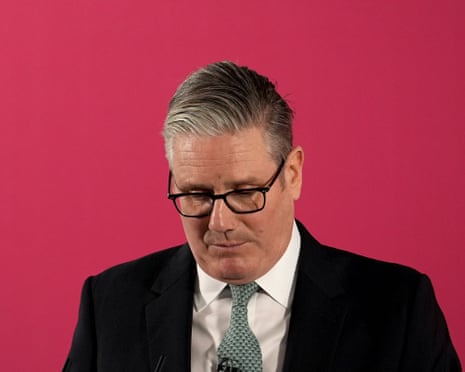
On Monday morning, no official leadership bid had been launched, and Starmer prepared to deliver a speech widely seen as another attempt to reset his premiership.
West said she would wait until after the speech before deciding her next steps.
In the address, Starmer promised to accelerate reform, insisting Labour needed to “move further and faster.” He argued that the government faced a larger challenge than it had anticipated in 2024 and warned that incremental change was no longer enough.
However, the speech failed to reassure Labour MPs who believe Starmer has already spent much of his time in office retreating from bold promises made during his leadership campaign. Critics argue he entered the Labour leadership contest promising major reforms — from student finance changes and ambitious green policies to stronger workers’ rights — only to abandon or dilute those commitments once in power.
To many within Labour, Starmer’s sudden rhetorical shift away from incrementalism appeared inconsistent and politically unconvincing.
West publicly dismissed the speech as insufficient and signaled she was abandoning her plan to act as a “stalking horse” challenger. Instead, she announced she was collecting names from Labour MPs to call on Starmer to establish a timetable for his departure and for the election of a new leader.
West later clarified she meant Labour should have a new leader in place by September, and that the leadership process should begin soon.
That announcement proved to be a turning point.
Labour MPs flood the airwaves with resignation demands
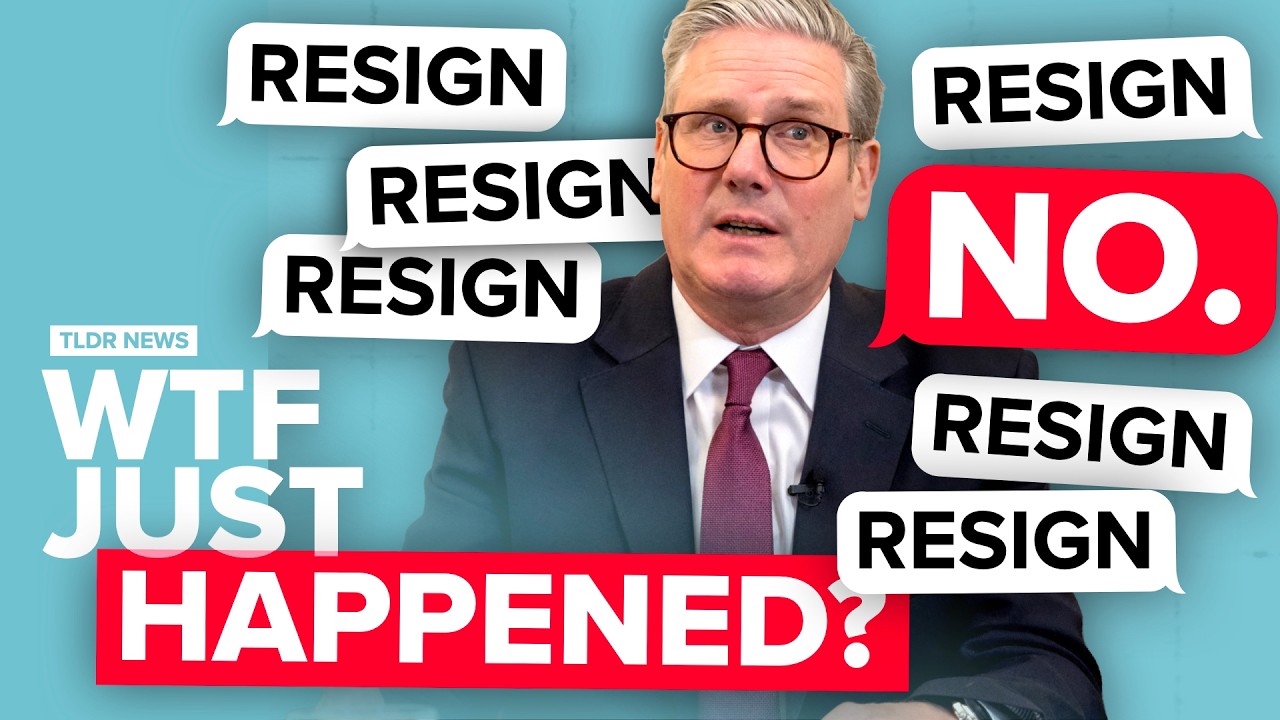
By Tuesday morning, the rebellion had grown dramatically. Around 80 Labour MPs had publicly stated that Starmer should resign. Many believed that a Tuesday cabinet meeting would force Starmer to accept reality and outline an exit strategy.
Expectations grew that Starmer would either announce his resignation outright or set a clear timeline for leaving office.
The leadership speculation quickly shifted to the likely contenders. Much of the discussion centered on whether Starmer would leave quickly — a scenario that could benefit Wes Streeting, as Andy Burnham would not have sufficient time to return to Parliament via a by-election, a requirement for becoming Labour leader.
Alternatively, if Starmer delayed his departure, Burnham would have more time to secure a parliamentary seat, positioning him as a stronger candidate.
However, Starmer did neither.
Instead, he reportedly told colleagues that because no leadership election had formally been triggered, he would continue governing and would not step aside voluntarily.
That decision effectively shifted responsibility back onto Labour’s potential successors, forcing them to choose between launching an official challenge or allowing Starmer to remain in place despite overwhelming dissatisfaction.
As Tuesday progressed, more Labour MPs issued statements calling for Starmer to resign. By mid-afternoon, the number had reportedly reached 87 MPs — including three ministers and six parliamentary private secretaries.
Notably, the dissent has not been limited to a single ideological faction. Reports suggest the rebels include Labour MPs from across the party spectrum, with significant representation from the party’s right wing, the soft left, and the hard left.
The breadth of opposition suggests Starmer’s leadership is facing a uniquely dangerous situation: a coalition of critics united not by ideology, but by the belief that he can no longer win.
Despite this, no one has yet launched the formal leadership challenge that would officially begin the contest.
This hesitation reflects the political dangers of acting first. A challenger risks being blamed for triggering instability, damaging Labour’s public standing, and potentially weakening the party against external opponents.
But as Starmer continues to refuse to step aside, pressure is mounting on his rivals to act.
Burnham’s potential return to Parliament fuels speculation
One of the most significant developments in recent days has been growing speculation that Greater Manchester Mayor Andy Burnham may be preparing to return to Parliament.
Reports suggest Burnham may have found an ally willing to step down in Greater Manchester, opening the possibility of a by-election that would allow him to secure a parliamentary seat. Under Labour’s rules, the party leader must be an MP.
It is also widely believed that Labour’s National Executive Committee would be unlikely to block Burnham’s candidacy in such a by-election, especially if the leadership crisis deepens.
Burnham’s potential return could transform the dynamics of the leadership race. His entry would likely force other contenders, particularly Wes Streeting, to decide whether to launch their own bid quickly or risk being overtaken by Burnham’s momentum.
Streeting is believed to have significant support among Labour MPs and may already have enough backing to trigger a leadership contest. Yet, like others, he appears cautious about making the first move.
If Burnham’s candidacy becomes more concrete, it could act as the catalyst Streeting needs to formally challenge Starmer.
Angela Rayner’s role remains uncertain
Angela Rayner is frequently mentioned as another possible challenger, but current speculation suggests she may be less likely to initiate a leadership bid.
Rayner has reportedly supported Burnham’s return to Parliament and has met with him on multiple occasions in recent months. This has fueled rumours that Rayner could ultimately align herself with Burnham, possibly even forming a joint political partnership in a future leadership arrangement.
Launching a leadership contest before Burnham is able to enter Parliament could complicate such a strategy and potentially undermine their shared positioning.
For now, Rayner’s moves appear cautious, suggesting she may be waiting to see whether Burnham formally re-enters the national political arena before making any decisive move.
Starmer’s survival strategy: delay and force rivals to act
Starmer’s refusal to step down is being interpreted by many as a deliberate political strategy. By insisting he will remain until a formal leadership election is triggered, he forces challengers to take responsibility for the party’s internal conflict.
This tactic places the burden of action on his rivals. If they initiate a challenge, they risk being portrayed as opportunists destabilizing a government. If they do not act, Starmer remains in place, even as his authority erodes.
It is a high-risk approach. While it buys Starmer time, it also prolongs the spectacle of internal division, potentially damaging Labour’s credibility with the public.
The growing rebellion suggests that even if Starmer survives in the short term, his leadership may become increasingly untenable as more MPs withdraw support and as pressure intensifies in the media.
Why Burnham is increasingly seen as the favourite
Despite the uncertainty surrounding the formal mechanisms of a leadership challenge, the political consensus emerging from Westminster is that Starmer’s days may be numbered.
Among the names being discussed, Andy Burnham is increasingly viewed as the most likely successor.
Burnham is believed to have support from senior Labour figures, including Angela Rayner, deputy leader Lucy Powell, and cabinet member Ed Miliband. His popularity also appears to extend beyond Westminster, with reports suggesting he is well-regarded among Labour’s grassroots membership and remains relatively popular with the general public compared to other potential contenders.
Burnham has cultivated an image as a pragmatic and locally grounded leader, often positioning himself as a voice for northern England and working-class communities. That profile may give him an advantage at a time when Labour is facing questions about its identity and electoral base.
Adding to speculation, Burnham reportedly met with Labour MPs in London on Tuesday evening, prompting widespread rumours that he may soon make a significant announcement.
A leadership contest now appears inevitable
While Starmer has not yet been formally challenged, the scale of opposition within Labour suggests the party is rapidly approaching a tipping point.
With nearly 90 MPs publicly calling for his resignation, and with the rebellion spanning ideological factions, the crisis is no longer a contained dispute. It is an existential struggle over Labour’s future direction, electoral strategy, and leadership credibility.
The only remaining uncertainty is timing: whether a challenger will act within days, or whether the standoff will drag on until internal pressure becomes impossible to ignore.
If a formal challenge is launched, Labour could be heading into a divisive leadership contest at a moment of significant national and international instability. The outcome could determine not only the future of Starmer’s premiership, but also whether Labour can unify quickly enough to face growing political threats — including Nigel Farage’s expanding influence.
For now, Starmer remains in office. But the political reality is increasingly clear: the Labour Party is already moving into a post-Starmer era.