
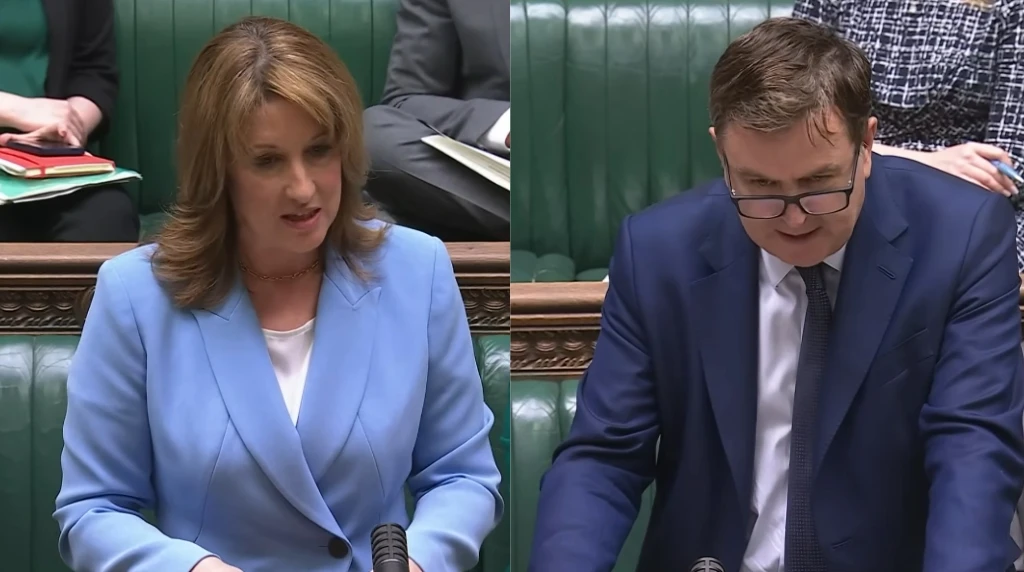
Chancellor of the Exchequer Rachel Reeves faced a blistering offensive from the Conservative opposition in the House of Commons today, following the Labour government’s decision to execute a major policy U-turn by freezing the planned fuel duty increase. The fiercely contested debate highlighted deep partisan divisions over the UK’s economic trajectory, domestic energy security, and Britain’s geopolitical stance on the escalating Iran conflict.
The U-Turn: Concession or Calculated Relief?
The flashpoint of the session was the Chancellor’s announcement to cancel the looming September fuel duty hike. The Shadow Chancellor lambasted the move as a delayed capitulation, arguing that the Conservative Party had been campaigning against the increase for months. The opposition framed the U-turn as a symptom of a “weak government caving into the inevitable,” accusing Labour of defending a “truly terrible decision” during an ongoing energy crisis before finally bowing to immense political pressure.
In her defense, Chancellor Reeves argued that the move was a proactive measure, noting she had already frozen the duty twice since taking office. She emphasized that the freeze comes with more than three months’ notice, providing certainty to motorists and businesses. Furthermore, Reeves announced a broader package of targeted economic relief, including increased support for hauliers, exemptions for red diesel utilized by the rail freight industry and farmers, and an increase in mileage rates—the first such increase since 2011. The Chancellor confirmed that this package is not funded by additional government borrowing, but by closing tax loopholes, specifically changes to the foreign branch exemption, which she stated will raise hundreds of millions of pounds annually.
Economic Crossfire: Dueling Narratives
The exchange exposed two starkly different interpretations of the British economy. The Conservative opposition painted a bleak picture of the current landscape, accusing Labour of fueling the highest inflation in the G7, overseeing a 75% increase in borrowing compared to inherited plans, and presiding over rising energy bills and business closures. The Shadow Chancellor challenged Reeves’s assertion that the economic outlook had improved enough to afford the tax cuts, pointing out that the International Monetary Fund (IMF) growth forecast adjustments hardly constituted a sudden “growth dividend.”
Reeves fired back with her own set of metrics, firmly rejecting the opposition’s narrative. The Chancellor highlighted that the UK was the only G7 nation where inflation fell in the previous month, and boasted that Britain recorded the fastest economic growth in the G7 during the first quarter of the year. Furthermore, Reeves countered the borrowing claims, stating that government borrowing has fallen below 5% for the first time since 2019 and is projected to decline in every year of the current parliament.
Geopolitics and Energy: The Iran Conflict and North Sea Oil
The debate quickly expanded from domestic taxation to foreign policy and energy security. The Shadow Chancellor accused the Labour government of making “ruinous choices” that left the UK economy highly exposed to the fallout from the ongoing Iran conflict. In a stinging rebuke, the opposition also criticized Labour’s approach to the North Sea, accusing the government of deliberately weakening domestic energy security by refusing to exploit natural resources, thereby effectively forcing the UK to import oil from “Putin’s Russia at the cost of Ukrainian lives.”
Chancellor Reeves delivered a forceful rebuttal, defending Labour’s decision to keep the UK out of the Iran war. She argued that entering the conflict—which she claimed the Conservatives and Reform UK were “cheering on every step of the way”—would have triggered far more severe consequences for the domestic and global economy.
On the energy front, Reeves insisted that oil and gas will continue to play an important role in the UK’s energy mix for years to come. However, she firmly pivoted toward the government’s clean energy agenda, criticizing the previous Conservative administration for mismanaging the legislative framework around North Sea projects like Jackdaw and Rosebank. The Chancellor championed Labour’s recent moves to restrict judicial reviews that delay clean energy investments and emphasized ongoing commitments to nuclear power, small modular reactors (SMRs), and offshore/onshore wind—initiatives she noted were opposed by the Conservative party.
Political Implications
The heated exchange underscores the intense pressure the Labour government faces as it attempts to balance fiscal responsibility with cost-of-living relief. While the fuel duty freeze will undoubtedly be welcomed by motorists and the logistics sector, the optics of the U-turn have provided the Conservatives with potent political ammunition.
As the geopolitical landscape remains volatile and energy prices fluctuate, the ideological battlelines in the Commons have never been clearer. For Labour, the challenge remains proving that their economic strategy can deliver sustainable growth without yielding to perpetual crisis management. For the Conservatives, the task is convincing the electorate that Labour’s fiscal and foreign policies are fundamentally flawed.


