
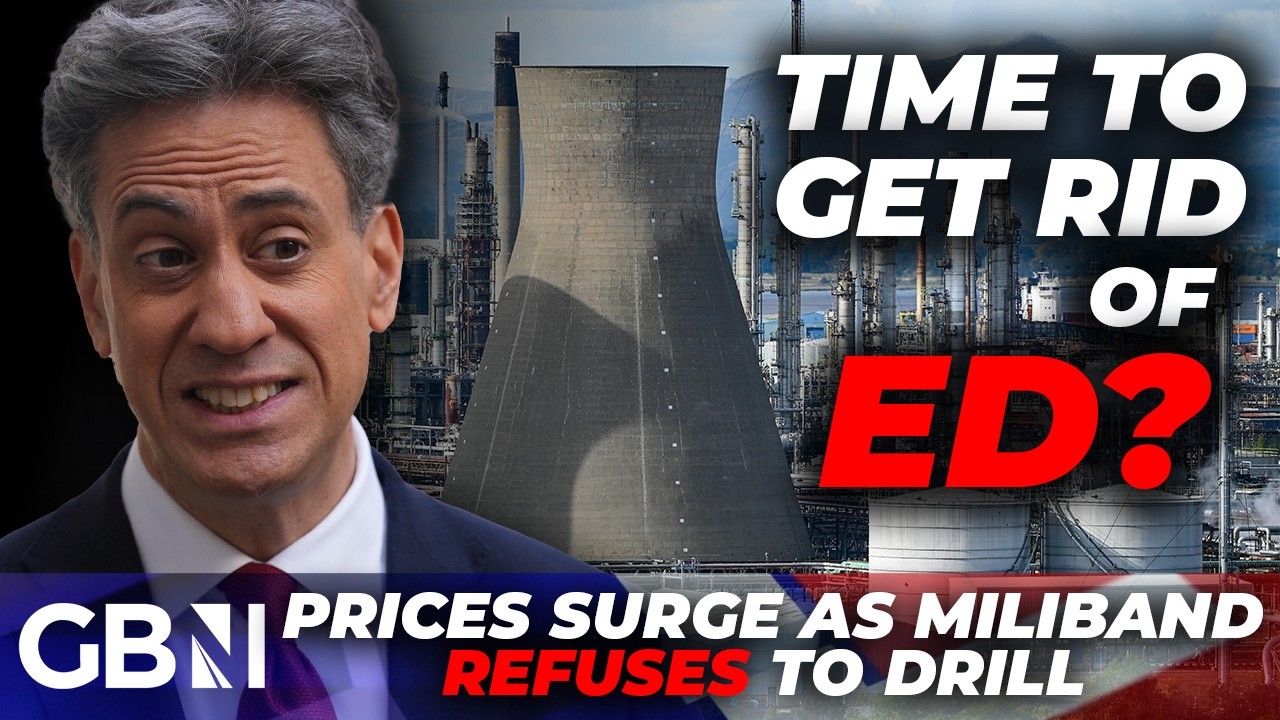
500 MILLION barrels are under our feet, but ONE man says “No”! 😱 As the Middle East burns and your bills EXPLODE, Ed Miliband is holding the line.
Energy Secretary Ed Miliband is facing intense political pressure and public backlash for his continued refusal to grant final approval for the massive Rosebank oil field, as global oil prices surge following the outbreak of a major Middle East conflict. With household energy bills projected to skyrocket by hundreds of pounds this summer, the government is embroiled in a fierce internal debate over national energy security.
The escalating war involving Iran has critically disrupted shipping through the vital Strait of Hormuz, triggering immediate fears of a prolonged global supply crisis. Analysts warn the blockage affects not only oil tankers but vessels carrying fertilizer, food, and essential goods, threatening severe economic fallout and potential rationing.
“It is a complete disaster,” stated former Labour adviser Scarlett Maguire during a televised discussion. “As soon as oil prices go up it affects everything… food prices, everything.” She highlighted reports that some East Asian nations are already moving to three-day working weeks due to supply chain paralysis.
All eyes are now on the Rosebank field, the UK’s largest untapped oil reserve. Located west of Shetland, it holds an estimated 500 million barrels of oil. Proponents argue fast-tracked development could see it producing millions of barrels domestically, reducing reliance on volatile imports.
“He is refusing to allow us to use the Rosebank oil fields,” Maguire said of Miliband, noting production could potentially begin by autumn. “Whether this will put enough pressure on the government to make him open up those oil fields… is yet to be seen.”
The crisis arrives at a perilous political moment for Prime Minister Keir Starmer, with local elections mere weeks away. Voter sentiment is heavily influenced by personal finances, and a spike in energy and fuel costs could dramatically worsen an already predicted difficult result for the governing party.

Opponents of Miliband’s stance argue the government must pursue every avenue for energy self-sufficiency. “We need to take all options available,” argued Daily Mail journalist Lettice Bromovich, also mentioning fracking. “We seem to be holding it off… we’re just delaying and delaying. At some point, we’re going to have to just commit.”
Defenders of the Energy Secretary counter that new oil fields are not a short-term solution. “It is a slight exaggeration to say that we could get it up and running by September,” Maguire conceded, though she acknowledged long-term benefits from tax revenues.
They emphasize a accelerated pivot to renewables and nuclear as more sustainable paths. “The other way long-term, which is a much safer way of course, is renewables,” Maguire added, citing her own halved heating bills due to solar panels.
The political storm extends beyond energy policy, touching on the government’s economic direction. Some voices suggest cutting taxes or reforming the welfare budget to put more money in consumers’ pockets, though such proposals ignite fierce debate over impacts on society’s most vulnerable.
This internal conflict is compounded by a perception of government indecision, highlighted by a recent reversal allowing U.S. forces to use UK bases for missile strikes in the Middle East—a move critics label a major U-turn. “People need a government they can believe in,” Bromovich stated.
With the cost-of-living crisis set to deepen, the cabinet faces a defining choice: override its climate-focused Energy Secretary to bolster immediate domestic supply or uphold its net-zero commitments while seeking alternative solutions to shield the public from economic pain. The decision will resonate far beyond the oil fields, testing the government’s resolve and defining its political future.


