
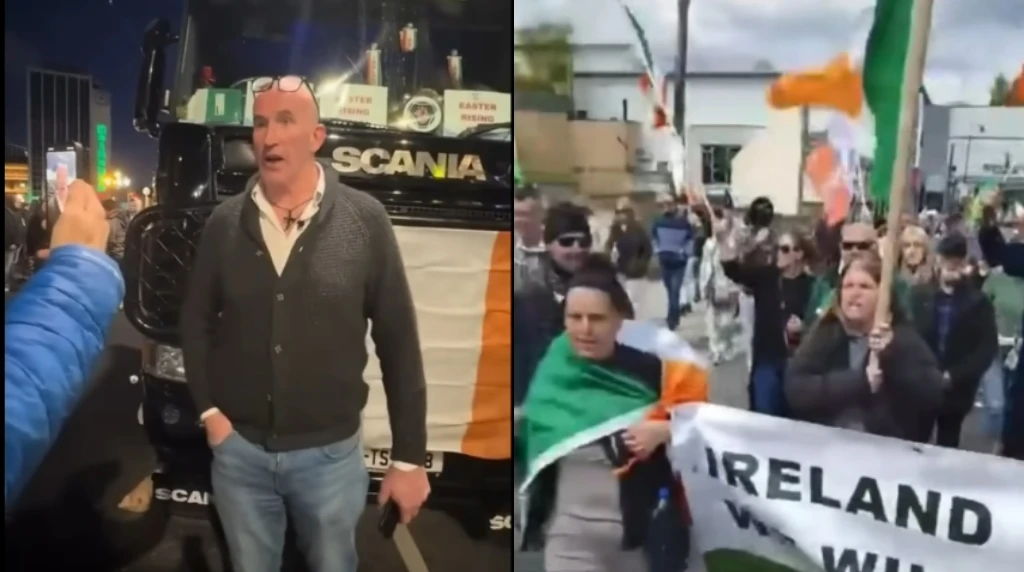
DUBLIN — Ireland’s government faced mounting pressure this week as fuel price protests entered their fifth day, paralyzing parts of the country and raising fears of broader economic disruption.
What began as coordinated blockades by farmers, truckers and rural contractors over soaring fuel costs has escalated into a significant test for the coalition led by Taoiseach Micheál Martin. Protesters have blocked key roads, fuel depots and ports, causing widespread fuel shortages and traffic chaos in multiple regions.
Organizers claimed that up to 200,000 people have been involved in various forms of action nationwide, though independent estimates put the core of active blockades significantly lower. The demonstrations have brought large parts of the transport network to a near standstill.
At the center of the anger is the sharp rise in diesel and petrol prices, driven by global energy market volatility and domestic taxes including carbon levies. Many participants say the costs are threatening their livelihoods in agriculture and haulage.
The protests have created scenes reminiscent of earlier rural discontent. Slow-moving convoys of tractors and heavy goods vehicles have clogged motorways, including stretches of the M50 around Dublin, while depots in places like Galway and Limerick were targeted.
Authorities have maintained a relatively restrained response so far. Garda Síochána officers have managed traffic and made some arrests during scuffles, but the military has not been deployed despite earlier speculation about potential intervention.
The government announced a €505 million support package earlier in the week, including targeted relief on fuel duties and rebates aimed at hard-hit sectors. Officials described the measures as a pragmatic response to immediate pressures while defending the broader climate and fiscal strategy.
Critics from opposition parties, including Sinn Féin, have used the crisis to launch a motion of no confidence, arguing that the government has lost touch with ordinary citizens struggling with the cost of living.
Protesters have rejected the package as insufficient, demanding deeper cuts to excise duties and a temporary suspension of carbon taxes on fuel. Some have vowed to maintain blockades until more substantial concessions are made.
The situation has exposed deep rural-urban divides. In cities, commuters and businesses report severe disruption to supply chains, with hundreds of petrol stations running dry. In the countryside, many express sympathy for the demonstrators’ grievances.
As the standoff continued into its fifth day, tensions rose near key infrastructure. Reports emerged of minor clashes between protesters and police, though large-scale violence has been avoided.
Parliament has become a focal point of political maneuvering. With the no-confidence motion looming, the government is under intense pressure to resolve the crisis before it spirals into a full collapse of support.
Economic analysts warn that prolonged disruption could damage Ireland’s reputation as a stable investment destination, particularly in logistics and agriculture-dependent sectors.
The protests reflect wider European anxieties over energy costs, inflation and the trade-offs of green transition policies. Similar actions have occurred in other countries, but Ireland’s heavy reliance on road transport has amplified the impact.
Prime Minister Martin has called for calm and dialogue, urging protesters to lift blockades and allow negotiations to proceed. He has acknowledged the genuine hardship faced by rural communities while warning against tactics that harm the wider economy.
Opposition figures have seized on the moment to portray the government as out of touch. Some have accused ministers of prioritizing ideological commitments over practical relief for working people.
For ordinary citizens, the effects are immediate and tangible: empty fuel pumps, delayed deliveries and uncertainty about daily commutes. Schools and hospitals have reported challenges maintaining normal operations in affected areas.
The coming days will be critical. If the protests continue without resolution, pressure on the government could become unsustainable. Yet any major concessions risk opening the door to further demands and fiscal strain.
Ireland’s experience highlights the difficult balancing act facing many Western democracies: addressing legitimate cost-of-living concerns while maintaining long-term climate and budgetary discipline.
As demonstrators continue to occupy key sites and politicians maneuver in Leinster House, the country finds itself in a moment of genuine strain. The outcome may shape not only immediate policy but the political landscape heading into future elections.
For now, the fuel protests have laid bare underlying tensions that extend far beyond the price at the pump. They raise fundamental questions about how Ireland navigates economic pressures, rural discontent and the pace of its environmental transition.
The resolution, when it comes, will likely involve compromise — but the episode has already left its mark on public trust and the government’s authority.


