
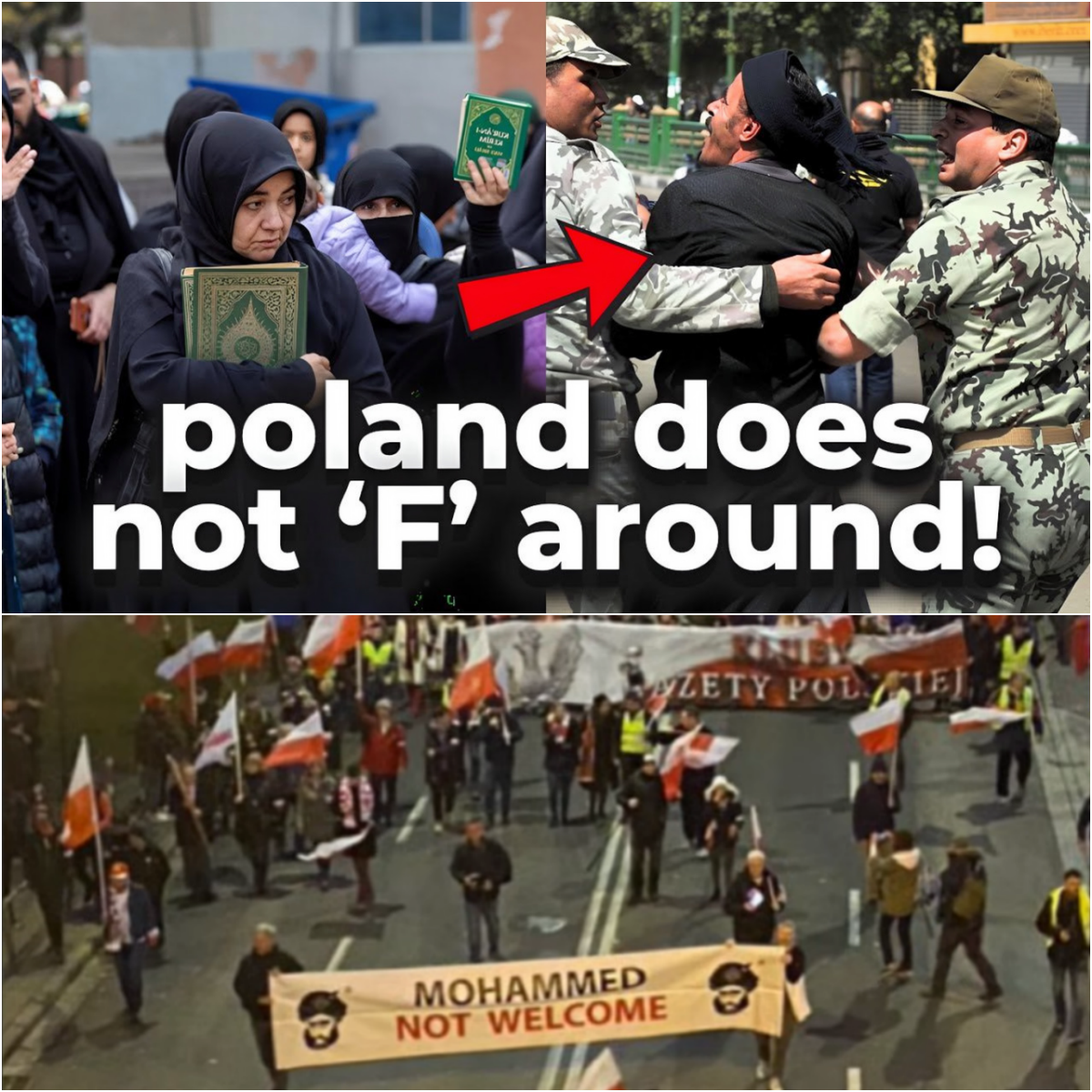
At stake is whether elected national governments or Brussels-based bodies should hold ultimate authority over sensitive domestic policies, including border security and decisions about who enters a country.
Poland has consistently resisted mandatory EU relocation schemes for asylum seekers, even as the new EU Migration and Asylum Pact took full effect in June 2026. Warsaw has secured temporary exemptions, citing the immense burden of hosting millions of Ukrainian refugees and managing hybrid warfare pressures on its eastern border with Belarus.
European officials maintain that shared challenges like irregular migration demand collective responsibility and solidarity mechanisms across member states. They argue that opt-outs undermine the fairness and effectiveness of the common European project.
Polish leaders, across both the government of Prime Minister Donald Tusk and the more nationalist-leaning presidency, insist that core issues of national security and immigration control must remain firmly in domestic hands.
The dispute has escalated into one of the most significant political fault lines in contemporary Europe, pitting assertions of democratic self-determination against the push for deeper integration.
Neither side shows signs of yielding. Poland has signaled it will apply only selected elements of the pact that strengthen border controls while rejecting relocation obligations and associated financial contributions.
President Karol Nawrocki has written directly to European Commission President Ursula von der Leyen, declaring that Poland will not consent to actions that settle irregular migrants on its territory. Public opinion in Poland strongly backs this stance, with surveys showing overwhelming opposition to mandatory migrant redistribution.
The government argues that Poland has already demonstrated solidarity by accepting large numbers of Ukrainian refugees fleeing Russia’s invasion. It also points to the heavy costs of fortifying the EU’s eastern frontier against instrumentalized migration flows encouraged by Belarus and Russia.
Brussels, for its part, views uniform rules as essential to managing migration pressures that affect the entire bloc. The pact includes options for financial contributions or other forms of support as alternatives to physical relocation, but core solidarity principles remain contentious.
The clash reflects broader tensions that have simmered for years. During the previous Law and Justice (PiS) era, Poland frequently clashed with the EU over judicial reforms, media freedom and rule-of-law concerns. While relations improved somewhat under Mr. Tusk, migration and sovereignty issues have kept friction alive.
Analysts see the current standoff as emblematic of a larger debate within the EU: how to reconcile national democracies with supranational governance in an era of external threats and internal divisions.
Poland’s position has drawn support from other member states wary of migration pressures, including Hungary. Together, they have challenged aspects of the pact and called for more flexible, nationally tailored approaches.

European Commission officials have warned that persistent non-compliance could lead to legal action or withheld funding, though temporary exemptions for frontline states like Poland complicate enforcement.
For Poland, the red line appears firm. Leaders emphasize that border security is inseparable from national survival, especially given the country’s geographic position and recent history of hybrid attacks.
The government has invested heavily in physical barriers, surveillance technology and rapid response capabilities along the Belarus border, achieving sharp reductions in illegal crossing attempts.
Critics within the EU and human rights organizations argue that some Polish measures, including temporary suspensions of asylum rights, go too far and risk violating international obligations.
Polish authorities counter that such tools are necessary responses to state-orchestrated migration used as a weapon, and that EU partners should focus more on external border protection and returns of rejected applicants.
The confrontation comes at a sensitive time for the European project. With ongoing wars in Ukraine and the Middle East, economic uncertainties and rising populist sentiments across the continent, migration remains a potent political issue capable of reshaping governments and alliances.
For the EU, allowing broad opt-outs could erode the credibility of its common policies. For Poland, yielding on sovereignty could undermine public trust and domestic political stability.
Observers note that the dispute is unlikely to be resolved quickly. Reviews of Poland’s exemption are scheduled for later in 2026, setting the stage for further negotiations or potential escalation.
In Warsaw, the government insists it remains a committed EU member while defending what it sees as vital national interests. In Brussels, officials continue to stress the need for unity and shared burden.
The outcome of this standoff may influence not only migration policy but the future shape of European integration itself — testing whether the bloc can accommodate diverse national realities or whether centralizing pressures will intensify.
As the confrontation unfolds, it underscores a core dilemma facing the European Union: balancing solidarity with respect for the democratic choices of its member states. Neither side appears ready to compromise on principles they view as existential.
The coming months of implementation, legal reviews and political maneuvering will determine whether this remains a manageable disagreement or hardens into a lasting rift.


